Category Archives: Author

Galore: A reflection on where I’m from

galore (adv.)
1670s, from Irish go leór, and equivalent Scottish Gaelic gu leóir “sufficiently, enough,” from Old Irish roar “enough,” from Proto-Celtic *ro-wero- “sufficiency.”

https://www.etymonline.com/word/galore

My father was adopted.

He was raised with love by a family with Irish roots. My entire life I associated strongly with that Irish heritage. I sang and danced during the loud and proud St. Patrick’s Day celebrations in Canada’s Ottawa Valley.

Then, this past Christmas, my son gave me a DNA test as a gift. The results showed my Irish DNA at the BOTTOM of the list of the ethnicity estimate, at 2 %.

2 %. I couldn’t have been more astonished.

A second surprise lay in store. The largest percentage of my DNA indicated Scottish and Scandinavian heritage. I am three-quarters Scottish and . . . Viking, I guess?

In September, as fate would have it, my son headed off to Edinburgh, Scotland to do his Master of Physiotherapy. We won’t travel there just yet (you know . . . COVID), but we’re making plans for future trips. I began to read Love of Country: A Journey through the Hebrides by Madeline Bunting.

I read about the land of my DNA. I read of crofts (small rented farms with a right of pasturage held in common with others), and machair (fertile plains), and lochan (small inland lakes). I learned the roots of the word galore (see above) and mused about how wonderful it is that galore really means that you have everything you need for the given moment.

All of this got me to thinking about where I’m from (Scotland/Scandinavia) as opposed to where I am really from (the Ottawa Valley, Canada).
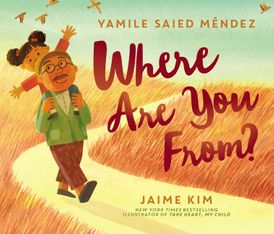
This past week, the book Where Are You From by Yamile Saied Méndez passed through my hands at the library where I work. It is the story of a child who must answer where she is from—no, where she is really from—to the point where it hurts.

When people ask someone like me where I’m really from, it means Where were you raised? What is the place that formed you?

For racialized people, the situation is reversed. For them, where are you really from means What foreign country did your people come from?

That makes it a backwards question, because for any of us, the place where we are really from is the place that has formed us.

My DNA says that the foreign countries my people came from were Scotland and the Scandinavian countries, but I’m really from a farm in the Ottawa Valley. I’m really from a place where we dug in the dirt to grow our food, where we wore hand-me-downs, and where neighbours and families helped each other out. On any given day we had everything we needed. Sufficiently, enough.

In other words, we had plenty galore. What a fine place to be from. Really.
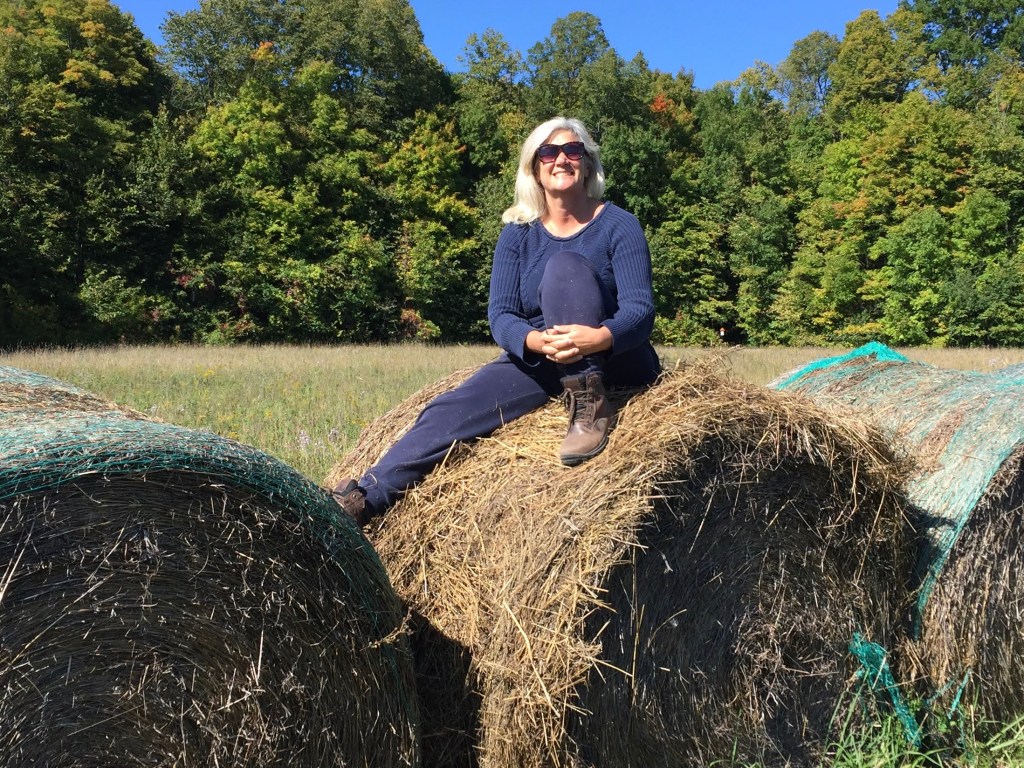
Arlene sitting on a round hay bale in a farm field.

Find things beautiful: van Gogh and us all

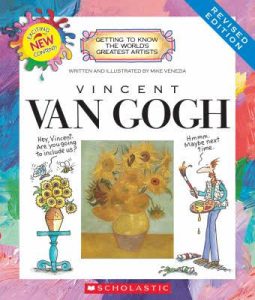
Vincent began to make his presence known in my life. Books about him passed through my hands at the library where I work.

The book Vincent Van Gogh by Mike Venezia

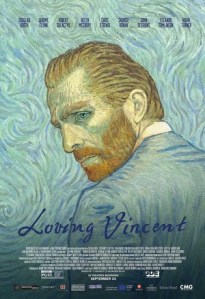
A library patron returned the DVD Loving Vincent and took time to tell me how much he enjoyed the movie.

DVD cover for Loving Vincent

A blogger I follow wrote about Vincent in A Sunflower Story.

And then I immersed myself in his art and his thoughts at Beyond van Gogh: The Immersive Experience. (Go, if it comes to a city near you.)

At the exhibition Vincent himself melted from the ceiling.

His brushstrokes came to life on the high walls and the floor all around me.

His artist soul reached out to my creative one as if he had written sentiments to me personally across centuries. I am certain every person immersed in his experience felt the same.

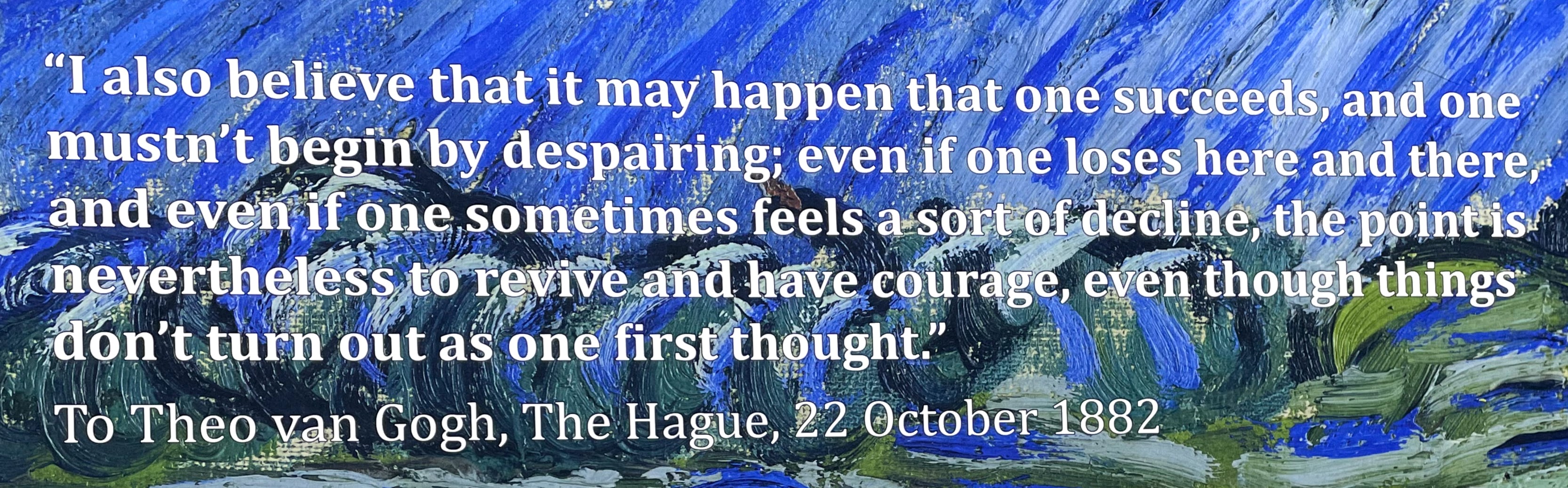
Quote, text against van Gogh brushstrokes: "I also believe that it may happen that one succeeds, and one mustn't begin by despairing; even if one loses here and there, and even if one sometimes feels a sort of decline, the point is nevertheless to revive and have courage, even though things don't turn out as one first thought." To Theo van Gogh, The Hague, 22 October 1882
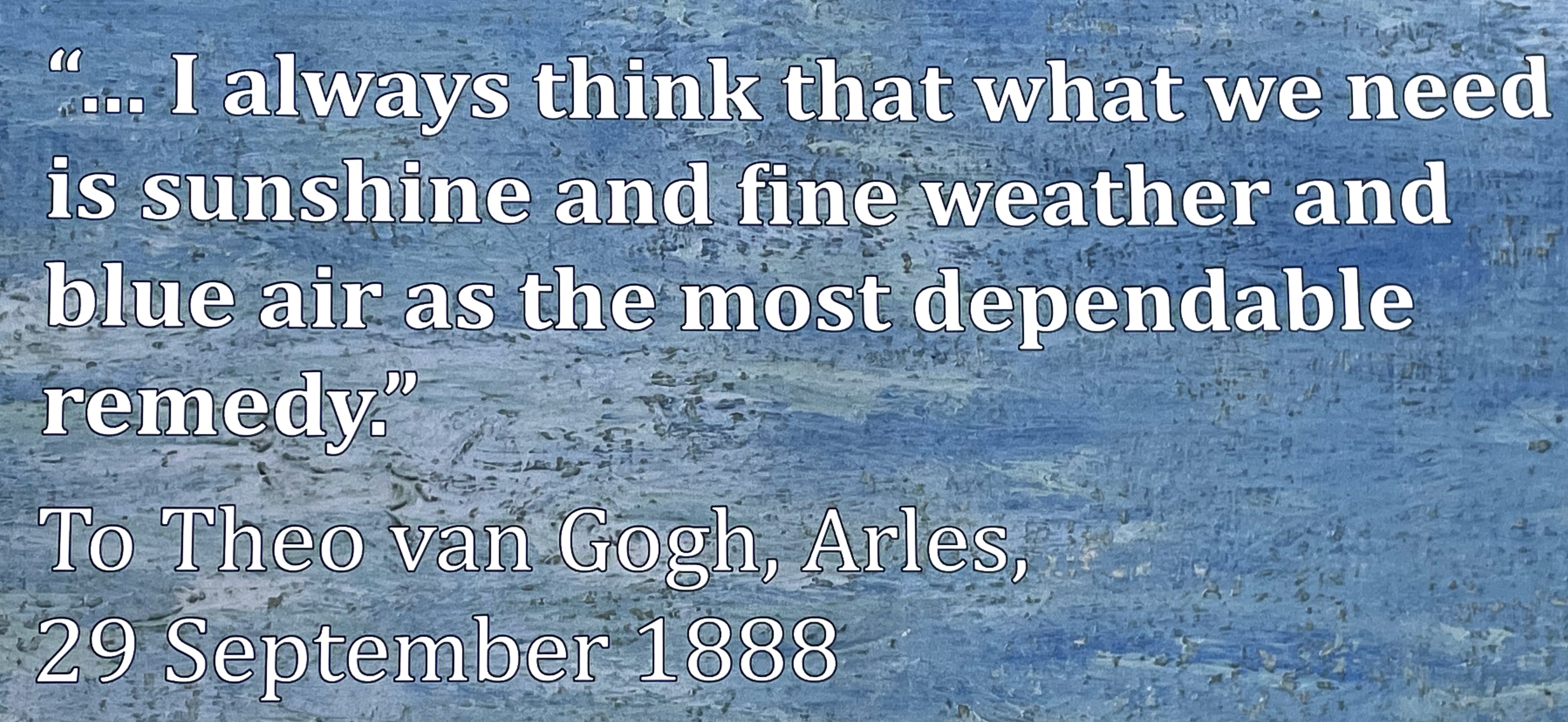
Quote, text against van Gogh brushstrokes: "...I always think that what we need is sunshine and fine weather and blue air as the most dependable remedy." To Theo van Gogh, Arles, 29 September 1888

Vincent told me to enjoy the air and sunshine. He urged me not to despair.

He reminded me to seek out the beautiful. A message sent to me, and you, from 1874 to the present.

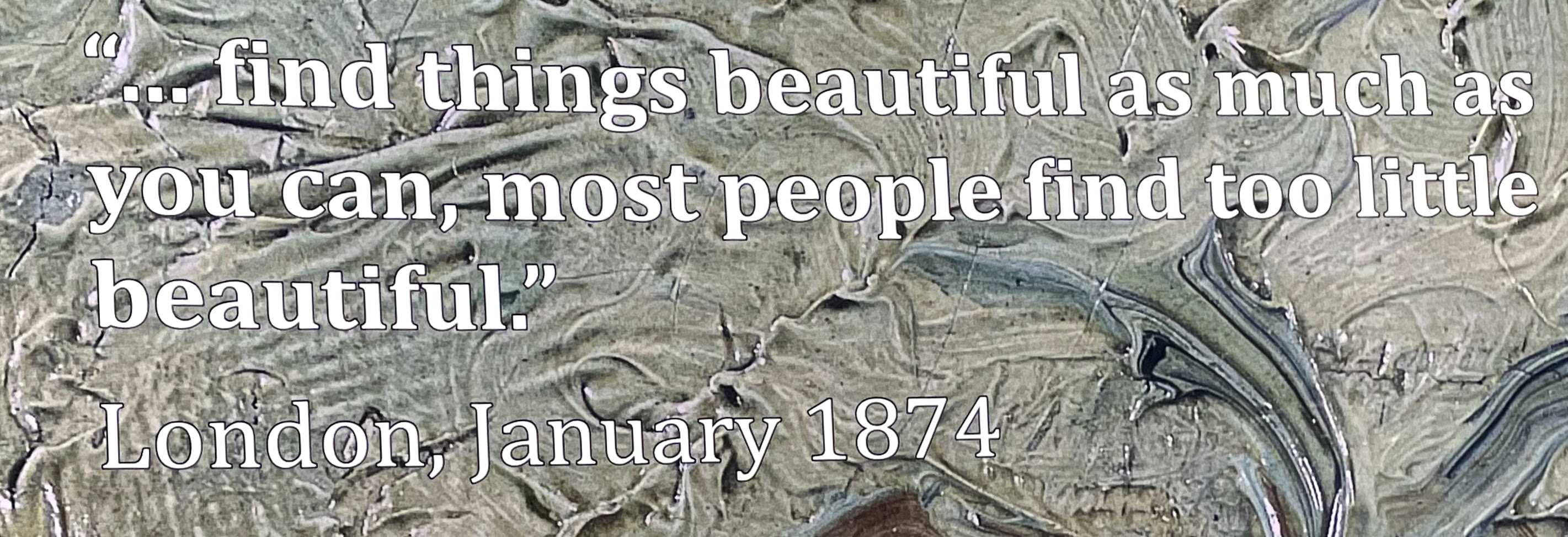
Quote, text against van Gogh brushstrokes: "...find things beautiful as much as you can, most people find too little beautiful." London, January 1874

Around the bigger obstacle

For the past few years, every time I walked on my favourite wooded path of the NCC Greenbelt, I have had to step over this fallen tree.

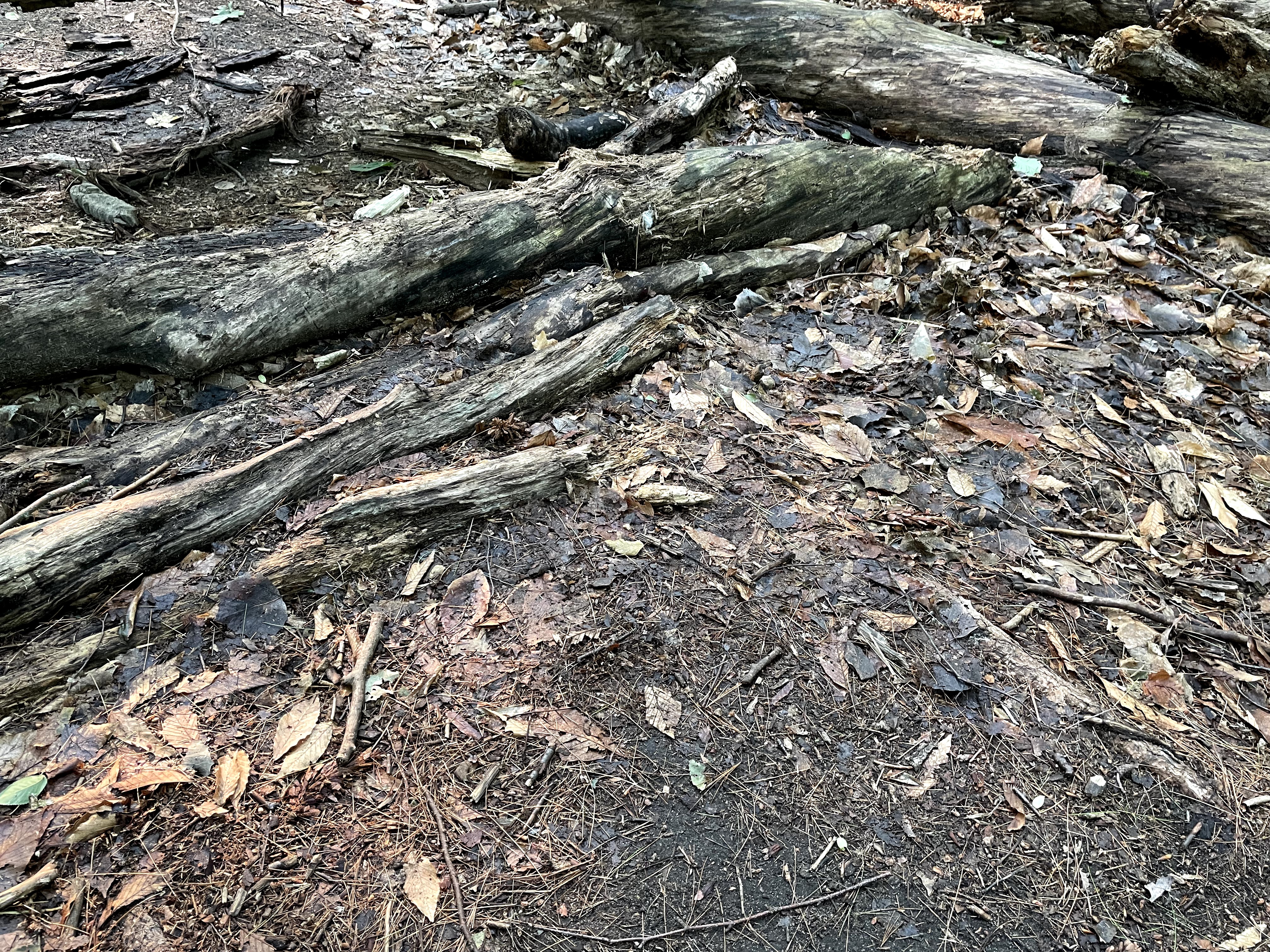
A decaying tree trunk, approximately 6 inches in diameter, across a forest path.

No big deal. The decaying trunk is small, and so many human feet and knobby bicycle tires have knocked wood chips out of it over the years, it is returning to its earthy source. I notice this fallen tree, and I must be certain not to trip, but all I need to do is take one larger-than-usual step to clear it.

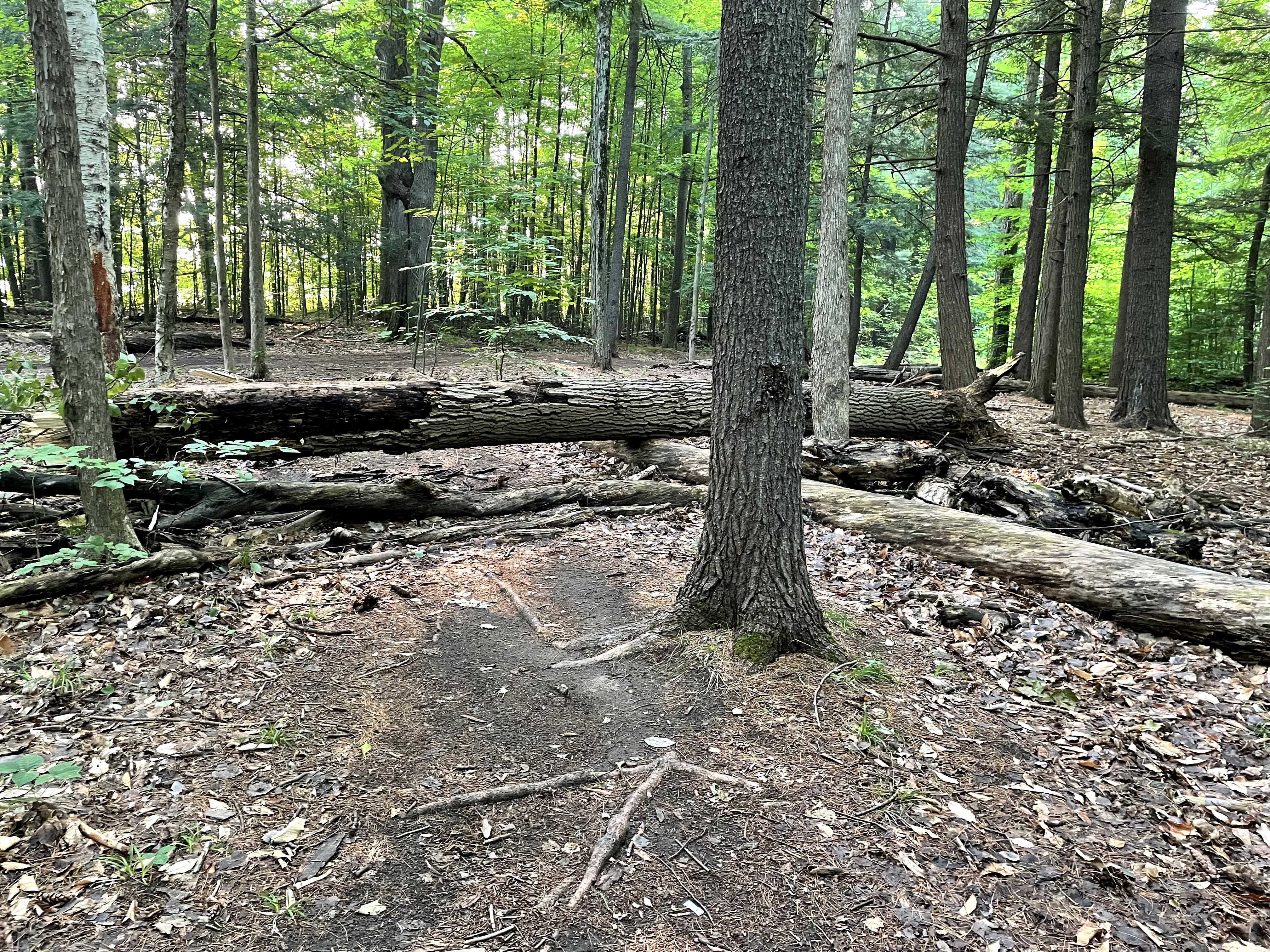
Yesterday I arrived at the spot. Beside the smaller fallen tree, exactly parallel to it, lay this larger tree trunk, knocked over by an overnight storm.

This one stumped me (pun intended) for a second or two. Too big to clamber over (at least with dignity intact). Too low to crawl under. Must go around.

In only one day so many others had resolved not to let a bigger obstacle block their path that the ground around it was already trodden flat.

New path being forged through the woods.

Every day I clear small obstacles in my path. I must notice them and take extra measures to deal with them, but I manage, no problem. I navigate the pylons narrowing the roadway on my way to work, and I take a few seconds to put on a mask before entering a store.

I ask myself though: Am I allowing some bigger obstacle to block my path? How can I go around?

May you have a day of small obstacles only. Do you have bigger ones you must go around?

Hammer and nail

“Into God’s temple of eternity | Drive a nail of gold.

—from In Search of a Soul by Raymond Moriyama
Box of Common 1-1/4-inch nails

We are spending some time at our cottage, where renovations never cease. It gives me opportunity to re-visit one of my past posts.


I sit on the sofa and contemplate a box of nails.

“Common” nails, the box tells me. Ordinaires. Nothing out of the ordinary.

Those common nails hold together the kitchen in which I sit—the heart of our cottage home—but only because they are working together. One nail alone can only endure stress for a brief time before it snaps from the strain.

Those common nails don’t judge themselves against longer ones, or thinner ones, or younger ones. They know they are the perfect size, material, and shape for their purpose.

The nails know and accept without question that they need help from an outside source: the hand that wields the hammer. Nails on their own must wait.

Once work is underway, the hammer strikes the nail. It doesn’t feel good. It hurts! Fulfilling purpose is not a pain-free, comfortable experience.

If I am a common nail, I have a purpose for which I am the perfect size, material, and shape.

The hand that wields the hammer is with me. I’d better call up some friends.

Revenue and paying

Where I live, in Canada’s National Capital Region, many people speak French. Perhaps the prevalence of the language around me is the reason why I began to ponder the word revenue.

In French, revenue is the feminine participle form of the verb revenir: to come back.

Elle est revenue. | She came back. 

For something to come back, it must go out in the first place. In other words, if you want revenue, put something out there, baby. She will come back. Elle reviendra.

These are the things I think about.

Also, paying attention. When we pay attention, we give our attention to something. Our attention goes out.

I don’t know about you, but when I wake up, give my head a shake, and choose to pay my close attention to a single thing in my surroundings, I always get something back.

Movement. Flow. To and fro. Giving and receiving. That’s how we get rich.

Put something out there. See what comes back.

Big rocks first

When I was in university years ago, I applied for a job. During my interview for the position, the board asked me to place the following items in order of importance: family, sports, friends, work, homework.

All these years later I now understand that the intent behind the question was: On any given day, when nothing special is going on, will you show up for work even if you have an overdue assignment or your friends are hosting the funnest party ever?

They wanted the answer to be: work, homework, family, friends, sports.

At the time I was thinking BIG PICTURE. What is most important, really? What is most important during times of crisis? What amounts to more than what you can carry in a file box at the end of the day?

I answered: Family, friends, work, homework, sports.

I didn’t get the job, but I still think I gave the right answer.

I was reminded of this by a video a friend posted on Facebook. It is important to take care of the big rocks first, or your life will be nothing but dust and pebbles.