Category Archives: Inspiration

Joy, because the first Christmas gifts were not reciprocal

Nativity scene

It did not happen like this:

Joseph: Mary, the wise men are on their way, and they’re all carrying something.

Mary: Carrying something? What could that be?

Joseph: I’m not sure, but one of them has something shiny. I think it’s gold.

Mary: Gold! Oh, no! But I didn’t get anything for them. Do we have something under the manger we can wrap up quickly?

You know the scenario: Someone you don’t usually exchange gifts with appears before you with a brightly wrapped Christmas gift. She beams with joy, because she has found the perfect thing. She saw it, thought of you and knew that you had to have it.

Do you receive the gift with unqualified gratitude? Or do you think, “Oh, no! I don’t have anything for her”?

We don’t know what exactly happened that first Christmas, but I like to I imagine that, if gifts were brought to the new baby, Mary and Joseph received everything with grace and gratitude. To do otherwise would have deprived the wise visitors of the joy of giving.

This Christmas, when someone beams with joy as they present you that perfect something bought out of love, receive it with unqualified joy and gratitude.

The joy of giving doesn’t depend on the joy of receiving.

Advent Wreath with candles for Hope, Peace and Joy lit.

The peace of lowered expectations

We are in a different kind of December. We can’t fill up our calendars with festive parties every weekend.

It’s strange, but you have to admit, you’re feeling more rested, and you have more time to do everything you want to do.

Maybe you won’t be making the drive to a family Christmas gathering. Maybe it will be the first time you miss it.

It’s sad, but you have to admit, it will save you a lot of stress. Christmas will be more peaceful.

The cookie exchange, the group of friends that gets together every year, the Santa pub crawl will all have to wait.

Those are tough sacrifices, but you have to admit, it will be nice to not have to bake so much, and it will be easier to stick to a healthful diet.

We are forced to let go of events, rituals, traditions. Some of them we happily set free; others we will miss terribly.

No matter what, there is breathing room in those lowered expectations.

Peace.

Advent wreath with Hope and Peace candles lit

Hope and faith: Something missing, something coming

On the four Sundays leading up to Christmas we light Advent candles—one candle per week, each with a different word associated with it: Hope, Peace, Joy and Love.

Usually the first Sunday of Advent falls on the same date as an important Canadian sporting event: the Grey Cup. [The championship game for the Canadian Football League.] Usually we host a gathering of neighbourhood friends for a Grey Cup party involving unhealthy food and beer. A kind of Canadian Superbowl party. At some point in the evening, we still the TV, quiet the conversation, and take time to be peaceful, to appreciate each other’s friendship, and to light the candle of Hope. 

This year the Canadian Football League did not play at all due to COVID. There was no Grey Cup. There was no gathering of friends.

We lit the candle of Hope, but something was missing.

But that’s when we feel hope, isn’t it? When we feel that something is missing. That’s when we yearn.

This year, there is a whole lot of yearning going on. So . . . many . . . things . . . we are missing.

In these times I try to remember that the sunshine side of hope is faith. That’s when we relax in the knowledge that all shall be well.

When we hope, our bodies are taut, we lean forward with fists clenched. In faith, we relax, drop our shoulders, breathe . . .

We hope because something is missing. We have faith because someday, somehow, something’s coming. Get ready.

Advent wreath with one candle of Hope lit.
The Candle of Hope

Squirrels with no fur upon thars

This post from my previous site is another one that continues to gather regular traffic.

Way back in 2012, I was standing at my kitchen sink washing dishes when I saw something that made me stop in the middle of scrubbing a pot: a creature in my back yard looked suspiciously like a rat. Yikes.

I watched it for a while wondering how much rat traps cost. Then I realized that it looked like a rat, but it didn’t behave like a rat. It behaved exactly like the other squirrels frolicking around my yard.

It was a squirrel with no fur on its tail.

The next day a second squirrel with no fur on its tail appeared; this one was grey. What was going on? How could there be two squirrels of different colours with furless tails?

Grey squirrel with no fur on its tail
With apologies for the blurry photos. This was 2012, after all.

I have since learned that they probably had mange, but at the time I didn’t know that.

What made my heart glad was that all the squirrels, whether they had fluffy tails or not, played together happily.

It reminded me of  “The Sneetches” by Dr. Seuss.

In that fabulous story, some Sneetches have stars on their bellies, but Plain-Belly Sneetches had “no stars upon thars.” In the beginning, the Star-Belly Sneetches won’t associate with their plainer counterparts. By the end of the story, after Sylvester McMonkey McBean sends them all on several trips through his Star-on or Star-off machine (only ten dollars each) the Sneetches no longer know “Whether this one was that one . . . or that one was this one / Or which one was what one . . . or what one was who.”

In other words, the Sneetches discovered that it’s what’s inside that counts. That’s something my backyard squirrels seem to know instinctively. They play together whether or not there is “fur upon thars.”

The Sneetches learned, the squirrels know it. Can we figure it out?

Still, and again, with the sheep

I had a blog at another URL, but I have been transitioning readers to this one. I plan to remove the other site someday, when the traffic there dwindles. The problem is, I still get many visitors to that site because of two posts: one about sheep, and the other about squirrels.

Maybe I should become a nature writer?

By far the most popular post is about sheep. Still, and again, I ask, why do so many people search for sites about sheep?

Do they feel like “lost sheep,” and need solace? Or are they “black sheep” and want to feel they aren’t alone? Maybe some kids need a sheep picture for a school project? Here’s one I took at the Experimental Farm in Ottawa, Canada. Feel free to use it.

lost-sheep

[Did you know that Ottawa, Canada has a farm in the middle of the city? Check it out. Central Experimental Farm]

Maybe we worry that we are becoming “sheeple,” blindly following along?

The website Sheep101.com informs me that the instinct to play follow the leader is hardwired into the brain of sheep. They can’t help sticking close to the sheep in front of them.

“When one sheep decides to go somewhere, the rest of the flock usually follows, even if it is not a good ‘decision.’ For example, sheep will follow each other to slaughter. If one sheep jumps over a cliff, the others are likely to follow.”

Sheep101.com

Sounds like sheeple to me.

They don’t even walk in straight lines. They wind back and forth so they can see behind them, first with one eye and then with the other, to watch for predators. In the natural world of predator and prey, sheep are prey. Their herding instinct keeps them together, because any “lost sheep” are vulnerable. They will be the first devoured by the pack of wolves.

No wonder those lost sheep need to be found.

As for the black sheep, Sheep 101 tells me that there were black sheep in the Old West of America. The black sheep were fewer in number and easy to spot, so they were used as “markers” to help count the sheep—one for every hundred sheep. The old time farmers said, “Once your markers are in, your flock is in.”

If you consider yourself to be the black sheep, know how useful you are. We need you to keep us sorted.

And now, I’m going to delete sheep from my other site. The squirrels are next. (I’ve got not deal with the squirrels.)

Desire Paths

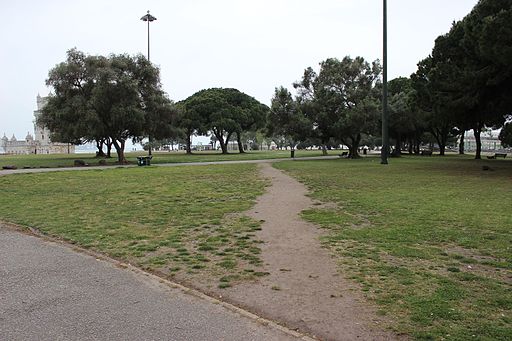
I first read about desire paths in The Old Ways: A Journey by Foot by Robert McFarlane, People and other animals create desire paths when they opt for the shortest, fastest routes to destinations.

Cow paths are the most famous desire paths. The cows take the shortest, fastest route between their pasture and milking time. I have seen flocks of sheep on desire paths too.

Metro Centric, CC BY 2.0 https://creativecommons.org/licenses/by/2.0, via Wikimedia Commons

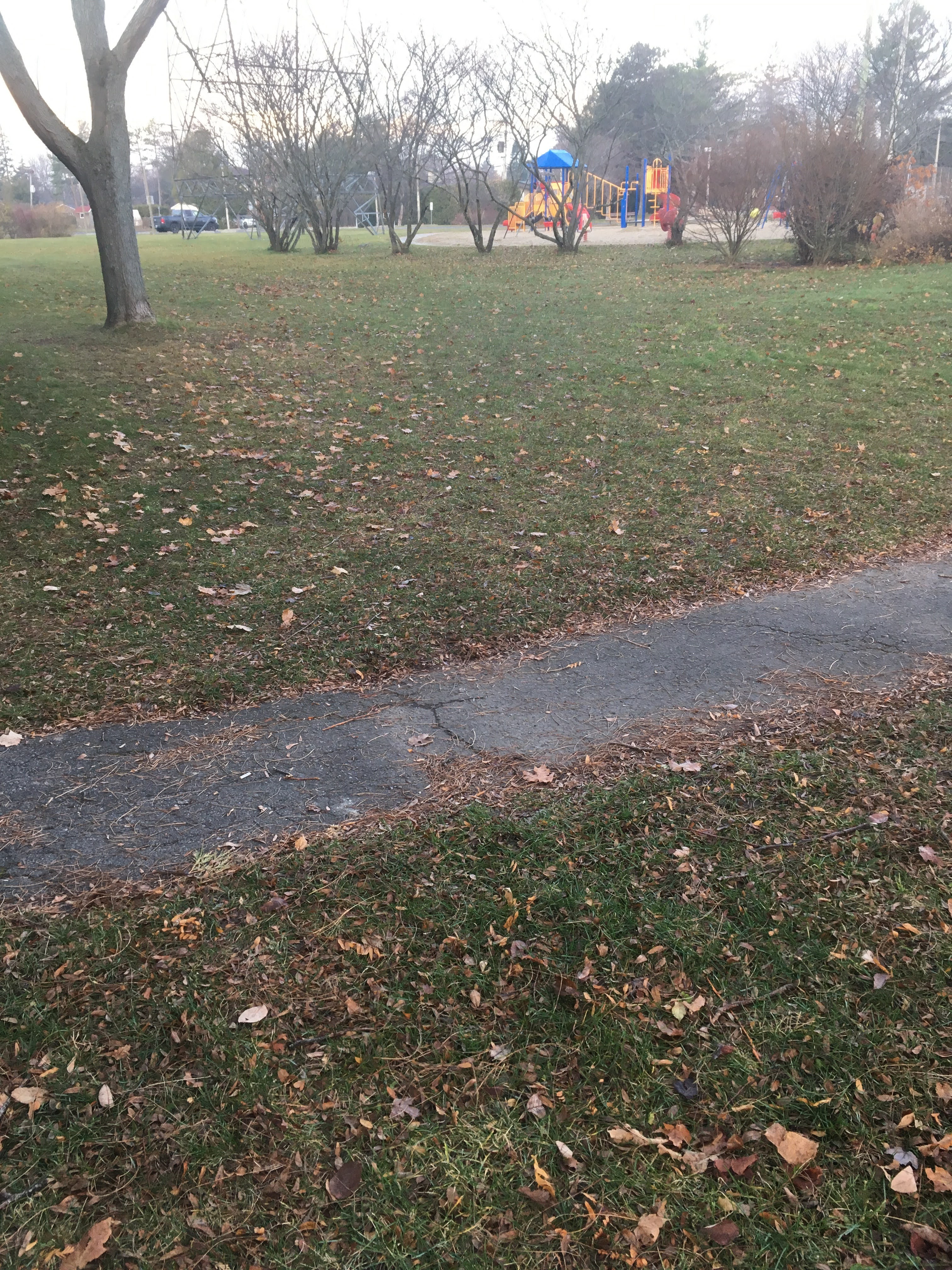
You have a desire path in your neighbourhood; I’m sure of it. There used to be one a few hundred feet from me in the park behind my house. Before COVID, my neighbours and I would beat the grass down while taking the shortest, fastest route to the bus stop.

This year, that desire path is gone. With COVID, people are either working from home or commuting to work in a different way. The grass is green and full, as if the desire path had never existed.

Park setting
The grass between the tree and the playground is usually trampled into a clear desire path. Not anymore!

Our desires changed so we quickly and effortlessly beat down new desire paths—around our neighbourhood, between our at-home desks and the bathroom, or maybe between our TVs and the refrigerator.

We effortlessly opt for desire paths every day. When we park at the grocery store and walk diagonally across the lot, we take a desire path. When we jaywalk to get to our favourite coffee shop faster, we’re choosing a desire path.

We know where we want to go, nothing holds us back, and we take the steps to get there the fastest. Easy right?

Why are other goals harder to reach?

Why don’t we simply jaywalk to the right career? We should be able to fast-track to the perfect relationship. To lose weight, all we have to do is eat less and exercise more.

But it’s more difficult when the target is uncertain, or when our emotions get in the way, or when the goal feels impossibly out of reach. We travel long, circuitous routes (or maybe never reach a destination) because we become paralyzed with fear, or we don’t believe we deserve love, or we compare our bodies to others.

For those not-so-clear, scary, long-term goals, it might help to:

  1. Place them in your favourite coffee shop in your mind.
  2. Do as the cows and sheep do and never spend one second comparing yourself to others or believing yourself unworthy.
  3. Forge ahead.
  4. Repeat.
Photo by Helena Lopes on Pexels.com