Another re-post during my mini-vacation. I spent last week participating in the Humber School for Writers Summer Workshop. The writers in my group agreed: Writing is a tough slog. But then, so is life in general! I might as well spend some of it writing and occasionally stumbling into moments of bliss.
At a gathering of our local branch of the Canadian Authors Association, we writers shared words to describe the writing experience.
Words for writing and life
Terror, right above Bliss.
Mystical right in the middle of everything.
Fun not far away.
Elusive, more than once.
Tranquility and Solace.
Hard work, Glass Wall, Escape.
Mindblowing, Universal, Wonder.
Our word cloud described the writing experience, and life in general.
I don’t know about you, but during this pandemic I have read more books electronically than ever. Without book stores or libraries, I have turned to e-books for my fix.
I prefer a paper book, but needs-must. The one thing I do like better about an e-book is the built-in dictionary. If I don’t know a word, I touch my finger and, voilà, there is the definition.
Here are some words I have learned in the past few months, used in a sentence:
glabellar: The smooth part of the forehead above and between the eyebrows. (Now that I’m older, my glabellar is not as smooth as this definition implies.)
synesthesia: A neurological condition in which information meant to stimulate one of your senses stimulates several of your senses. (Some people with synesthesia always see the letter A in the colour red, and when I see I word I don’t know in a book, I see red.)
faffing: [UK informal] To spend time doing a lot of things that are not important instead of the one thing you should be doing. (At a cottage it is easy to spend time faffing around instead of writing blog posts.)
hierophant: A person, especially a priest in ancient Greece, who interprets sacred mysteries or esoteric principles. (I need a hierophant to help me understand some things in the books I’m reading.)
tricoteuse: A woman who sits and knits, a reference to women who did this at public executions during the French Revolution. (I would be willing to become a tricoteuse during the trial of a writer who uses the word tricoteuse.)
prelapsarian: Characteristic of the time before the fall of man [Editor’s note: they mean people], that is, innocent and unspoiled. (In the prelapsarian Eden, people used non-gender specific language.)
hoaching: Full of or swarming with people. (During this time of pandemic avoid hoaching places.)
How are you reading these days? What have you learned from that experience?
At a cottage it’s easy to spend time faffing around.
Muth took a short story written by Leo Tolstoy and reworked it with animal characters to appeal to children. In the book, a boy named Nikolai goes on a journey to seek answers to three BIG LIFE questions:
“When is the best time to do things?”
“Who is the most important one?”
“What is the right thing to do?”
His steps lead him to encounters with a heron, a monkey and a dog. Each of these characters answers the questions in way that reflects personal biases. The heron suggests the best time to do things is after everything has been planned in advance. The dog believes the most important one is the one who makes the rules, and the monkey knows the right thing to do is to have fun all the time.
Not satisfied, Nikolai climbs a high mountain to seek the answers to his questions from a wise old turtle.
When he reaches the top of the mountain, he finds the wise, old turtle digging a garden. Wanting his full attention and knowing that a young boy digs much faster than an old turtle, Nikolai takes the shovel and finishes turning over the hard soil.
When he is leaning on his shovel after the last shovel full of dirt, he hears a cry for help coming to him out of the windblown forest. He follows the sound and finds a panda knocked out by a fallen tree. Nikolai rescues her and takes her to the turtle’s house to get warm.
When the panda wakes up, she asks, “Where is my child?” Alarmed, Nikolai runs back to the forest where he finds the baby panda, shivering and alone.
Before Nikolai departs, he and the wise old turtle reflect on the answers the boy has found.
“There is only one important time, and that time is now.”
“The most important one is always the one you are with.”
“The most important thing is to do good for the one who is standing at your side.”
Word of the day: "temenos" – a sacred place, an area of landscape dedicated to worship or deemed to be divine. From ancient Greek τέμενος; in Latin, a "fanum". Metaphorically, therefore, a space of special sanctuary, imaginative power or numinosity. Where is your "temenos"? pic.twitter.com/O8YB2iImsD
Another week without our usual workplaces, casual trips to the store, or gatherings of friends.
Some of us have let go of long-planned vacations.
Some of us are seized with panic about lost income.
We have let go of what is not essential. We are waiting for “normal.”
Our situation reminds me of this beautiful work by Macrina Wiederkehr, a Benedictine sister, author, and lover of the spiritual.
She wrote this poem, which she gave me permission to share, about times when we are stripped down, vulnerable, and “wearing the colors of emptiness.” At those times, we are living out the Sacrament of Waiting, ready for a new, surprising kind of beauty.
Slowly she celebrated the sacrament of letting go.
First she surrendered her green,
then the orange, yellow, and red
finally she let go of her own brown.
Shedding her last leaf
she stood empty and silent, stripped bare.
Leaning against the winter sky,
she began her vigil of trust.
Shedding her last leaf,
she watched it journey to the ground.
She stood in silence
wearing the colors of emptiness,
her branches wondering,
How do you give shade with so much gone?
And then,
the sacrament of waiting began.
The sunrise and the sunset watched with tenderness.
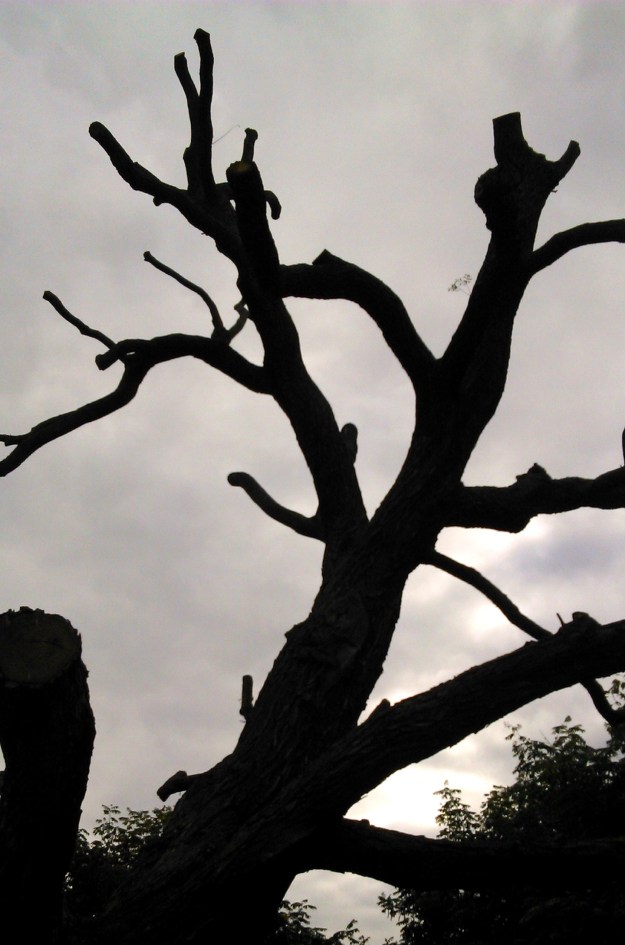
Clothing her with silhouettes
that kept her hope alive.
They helped her to understand that
her vulnerability,
her dependence and need,
her emptiness, her readiness to receive,
were giving her a new kind of Beauty.
Every morning and every evening they stood in silence,
and celebrated together
the sacrament of waiting.



 Somerton Smith