In our house, we count down to Christmas by lighting candles on the Advent wreath—one every Sunday before Christmas.
The fourth candle is the LOVE candle.
No matter what you believe, the Christmas story, and the stories of man whose birth we celebrate at Christmas, are about LOVE.
An unmarried woman gets pregnant? Love her anyway. A child is born out of wedlock? Love him anyway. A man is disenfranchised from society? Eat with him and love him anyway. A woman has a communicable disease? Walk with her and love her anyway. Someone wants to learn or play or work even though it’s a holy day? Teach them, laugh with them or help them and love them anyway.
This holiday season—no matter what or how you celebrate—love anyway.
Widely, madly, indiscriminately.
13 And now faith, hope, and love abide, these three; and the greatest of these is love.
— 1 Corinthians 13:13
This year, the best way we can show love is by keeping ourselves, our families and friends safe.
Sometimes we show the greatest love by staying away. With faith, and hope, we will abide, even when apart.
Joseph: Mary, the wise men are on their way, and they’re all carrying something.
Mary: Carrying something? What could that be?
Joseph: I’m not sure, but one of them has something shiny. I think it’s gold.
Mary: Gold! Oh, no! But I didn’t get anything for them. Do we have something under the manger we can wrap up quickly?
You know the scenario: Someone you don’t usually exchange gifts with appears before you with a brightly wrapped Christmas gift. She beams with joy, because she has found the perfect thing. She saw it, thought of you and knew that you had to have it.
Do you receive the gift with unqualified gratitude? Or do you think, “Oh, no! I don’t have anything for her”?
We don’t know what exactly happened that first Christmas, but I like to I imagine that, if gifts were brought to the new baby, Mary and Joseph received everything with grace and gratitude. To do otherwise would have deprived the wise visitors of the joy of giving.
This Christmas, when someone beams with joy as they present you that perfect something bought out of love, receive it with unqualified joy and gratitude.
The joy of giving doesn’t depend on the joy of receiving.
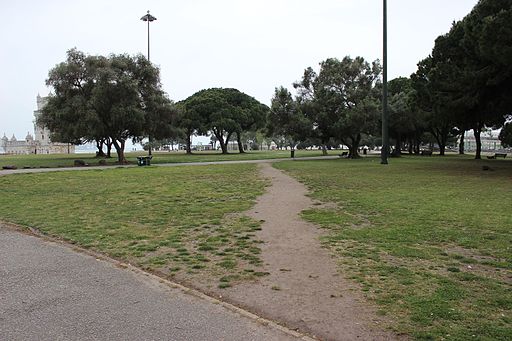
I first read about desire paths in The Old Ways: A Journey by Footby Robert McFarlane, People and other animals create desire paths when they opt for the shortest, fastest routes to destinations.
Cow paths are the most famous desire paths. The cows take the shortest, fastest route between their pasture and milking time. I have seen flocks of sheep on desire paths too.
You have a desire path in your neighbourhood; I’m sure of it. There used to be one a few hundred feet from me in the park behind my house. Before COVID, my neighbours and I would beat the grass down while taking the shortest, fastest route to the bus stop.
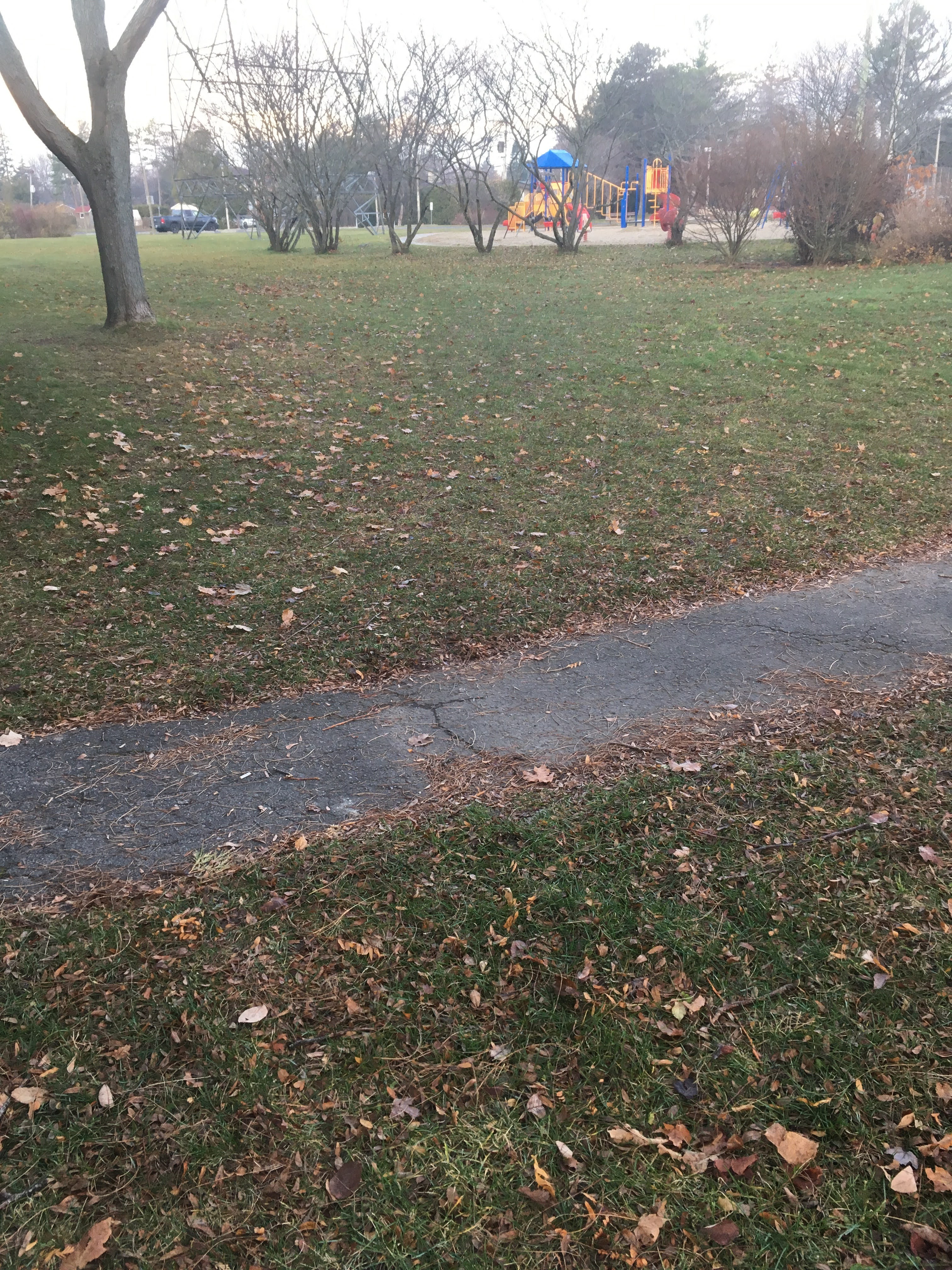
This year, that desire path is gone. With COVID, people are either working from home or commuting to work in a different way. The grass is green and full, as if the desire path had never existed.
The grass between the tree and the playground is usually trampled into a clear desire path. Not anymore!
Our desires changed so we quickly and effortlessly beat down new desire paths—around our neighbourhood, between our at-home desks and the bathroom, or maybe between our TVs and the refrigerator.
We effortlessly opt for desire paths every day. When we park at the grocery store and walk diagonally across the lot, we take a desire path. When we jaywalk to get to our favourite coffee shop faster, we’re choosing a desire path.
We know where we want to go, nothing holds us back, and we take the steps to get there the fastest. Easy right?
Why are other goals harder to reach?
Why don’t we simply jaywalk to the right career? We should be able to fast-track to the perfect relationship. To lose weight, all we have to do is eat less and exercise more.
But it’s more difficult when the target is uncertain, or when our emotions get in the way, or when the goal feels impossibly out of reach. We travel long, circuitous routes (or maybe never reach a destination) because we become paralyzed with fear, or we don’t believe we deserve love, or we compare our bodies to others.
For those not-so-clear, scary, long-term goals, it might help to:
Place them in your favourite coffee shop in your mind.
Do as the cows and sheep do and never spend one second comparing yourself to others or believing yourself unworthy.
I never thought I’d see the day. This week I saw a headline about the United States that read: “An Empire Has Fallen.” Conversations over the past few days have involved the phrase, “I hope the election can unfold without violence.”
Dear America, what has become of you? As often as I have resented you for being bigger, better at the Summer Olympics, and more replete with winter sunbathing beaches than my Canada, more often I have admired you. Oh, how I want to do so again.
I can’t bear to think about the election. It’s so out of my control. I’m distracting myself with happy thoughts. Like rubber boat, for instance.
Recently, on The Spectacled Bean blog, Ally asked the question: “Of all the words in the English vocabulary which ONE is your favorite?” (Something to ponder.)
It reminded me of an experience I had way back in 1980 when I was an exchange student in Mexico. I went to an all-girls, Catholic high school. (Quite a change for me. This Protestant girl did not know a Hail Mary from a Hall Monitor.) I was learning to speak and write Spanish, but the girls there loved to practice English.
One day, in a book we were working on together, we came across a picture of a rubber dinghy. The girls asked me how to say it in English.
“Rubber boat,” I replied.
They fell apart laughing. To a Spanish ear, that sounds hilarious.
“What?!” they said. “Say it again!”
“Rubber boat,” I repeated.
They howled with laughter, even louder than before “Again!”
“Rubber boat,” I said.
The more I said it, the harder they laughed. Then they tried saying it, and I couldn’t help laughing at them. Soon all of us were gasping for breath with tears running down our faces.
Ah, such a happy memory. I’m going to ride it into this week. America, I’m pullin’ for ya.
I am an optimist. I CAN’T HELP IT. When unfortunate events occur, my natural response is: “Okay, let’s deal with this. How can good come of it?”
This past week I was alarmed and disturbed when someone brought the phrase “toxic positivity” to my attention. The Psychology Group calls it “the dark side of the ‘positive vibes’ trend.”
We define toxic positivity as the excessive and ineffective overgeneralization of a happy, optimistic state across all situations. The process of toxic positivity results in the denial, minimization, and invalidation of the authentic human emotional experience.
— The Psychology Group: “Toxic Positivity: The Dark Side of Positive Vibes”
Has my relentless positivity been annoying the heck out of people? Have I been robbing people of their sorrow? Maybe I have friends who are secretly licking wounds I unintentionally inflicted on them?
If so, I apologize, but I CAN’T HELP IT.
It’s not that I don’t ever feel sad, or disturbed, or angry. I do. But I am incapable of dwelling in those states, and I find it hard to understand it when people do.
If there was ever a time for people to explore the breadth of emotions, it’s during a pandemic. Over the past seven months I have felt sad, disturbed and angry. Of course I have. But I’ve also been saying, “Okay, let’s deal with this. How can good come of it?”
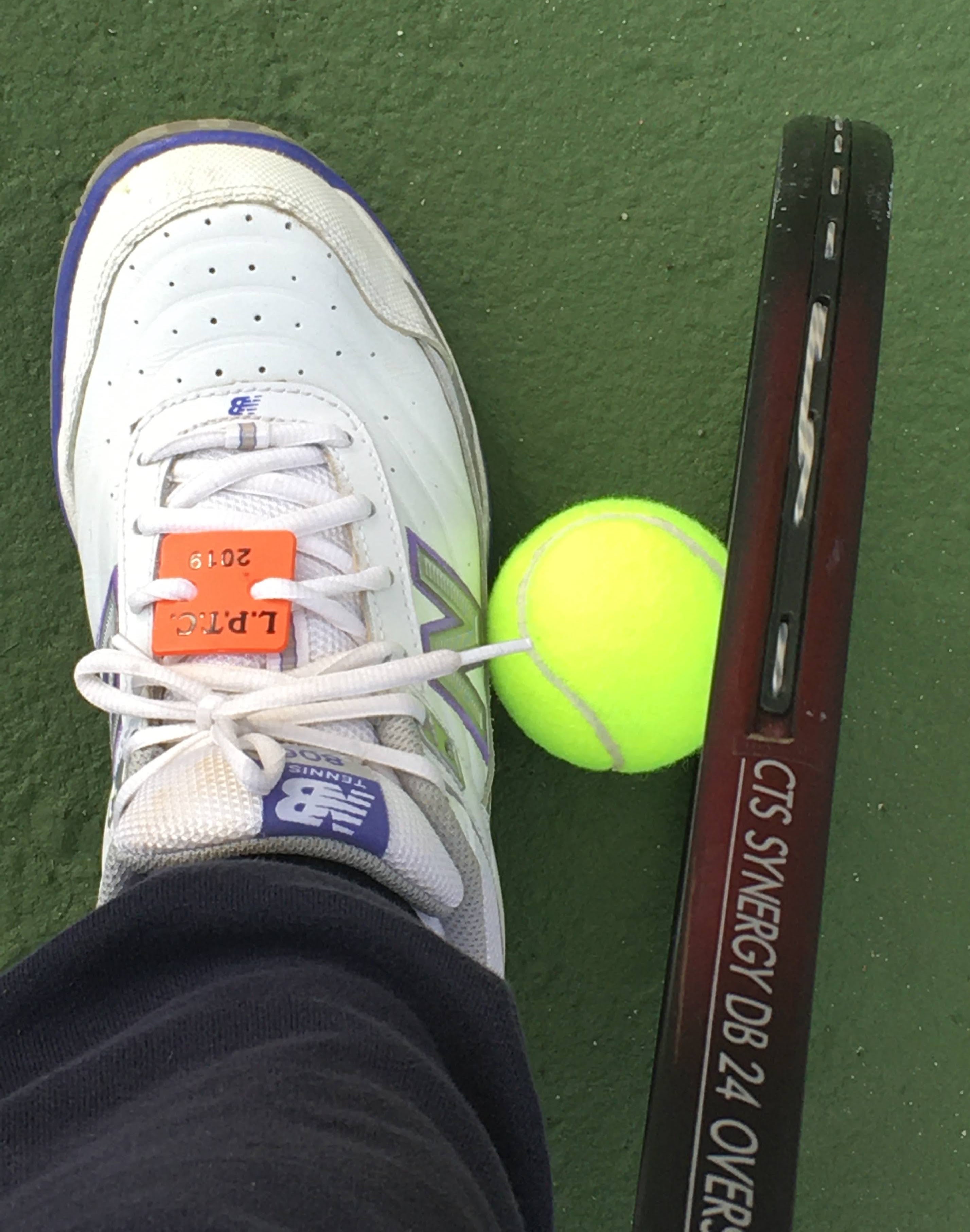
I have been practising gratitude at every turn, and I have found so many things to feel positive about. For example, I am grateful to have acquired the skill of picking up a tennis ball without using my hands, so as to (ahem) not touch other people’s balls.
No more bending! I can now lodge the ball between my shoe and the racquet and lift.
When I asked my Facebook friends, they too had found many positives amongst the negatives.
Physical Activity: My friends took up physical activities they had never done before, or had not done in a long time: tennis, biking, walking, and stand-up paddleboarding. One friend described her new kickboxing habit as a “great way to work out the COVID angst.”
Technology: We have learned how to use online communications platforms. We are doing online coaching, yoga and fitness classes. One friend learned how to use a coverstitch sewing machine to make athletic leggings with a professional look. And, of course, there’s online grocery shopping.
Connections: We aren’t seeing people like we were before, but we’re seeing people in a different way. One women meets a 94-year-old friend from Scotland every week via Zoom. Many people have met neighbours they never knew before, because suddenly everyone is working from home and going for walks. We’re helping each other with groceries and dropping off baked goods. We’re enjoying family time. playing games, eating together. While stocking up on books before the lockdown, a friend met someone who runs a writers group.
Services: Two of my friends learned how to groom their dogs. Many, many of them cut their own hair or a family member’s hair. We watched YouTube videos to learn how to do just about anything. Another friend has learned how to do her own gel nails.
Hobbies: Sewing, cooking new things, gardening, drying seeds, and canning are on the list of hobbies developed in the past seven months. I’ve been doing lots of writing. One friend started buying and selling used vinyl (albums in my lingo). He is, “having a blast. Meeting all kinds of interesting people (at a distance) and adding considerably to [his] music knowledge base.”
Self-care: Through all of this we have been trying to take care of ourselves. The physical activity is helping with that. One friend lost 30 pounds. Another friend has taken up a meditation practice.
These are all little ways of dealing with the negative. When can do them when we’re sad, mad or angry.
Collectively we’re saying, “Okay, let’s deal with this. What good can come of it?”
Put on a happy face . . . but only when you’re ready.




 Somerton Smith