Tag Archives: Mindfulness

Mow around the daisies

We have a lawn at our cottage, but it’s not a flawless stretch of green grass. The rural property at this time of year is dotted with daisies, which we resolutely mow around.

The tradition began with my mother-in-law. She wanted to keep the lawn looking nice and well cared for, but she couldn’t bring herself to mow down a beautiful flower in a natural setting. We honour her when we leave those daisies swaying in the summer breezes.

I’m not sure what our neighbours think of the patchy mowing job. Perhaps they mutter: “I wish those people would do something about that lawn.”

My wish would be that they choose instead to enjoy the beautiful flowers and take a moment to feel grateful for the gift from nature.

When life gives you beauty, don’t mow it down.

Just . . . know, or just . . . no

Do you ever hover between yes and no?

Saying yes can

  • suck away hours of time for a project you’re not passionate about
  • lead you to grand adventure, in the way of Shonda Rhimes
The book YEAR OF YES by Shonda Rhimes

Saying no can

  • save you from being used or abused, or from drugs as Nancy Reagan would have wished
  • deny you fun or a fantastic learning and growing experience

Some days, on the surface, it seems hard to decide. You have to dig deep before the answer is clear. When you do, you discover you just . . . know.

Other times the answer is spelled out.

In my cottage area, garbage must be protected from wild animals. Waste management workers need to access the containers, so parking in front of them is a definite NO.

I love the simplicity of the sign. One word. No explanation required. If you’re the person thinking of parking in that space, just . . . no.

You just know, or just no. The answer is always clear.

Odd but beautiful

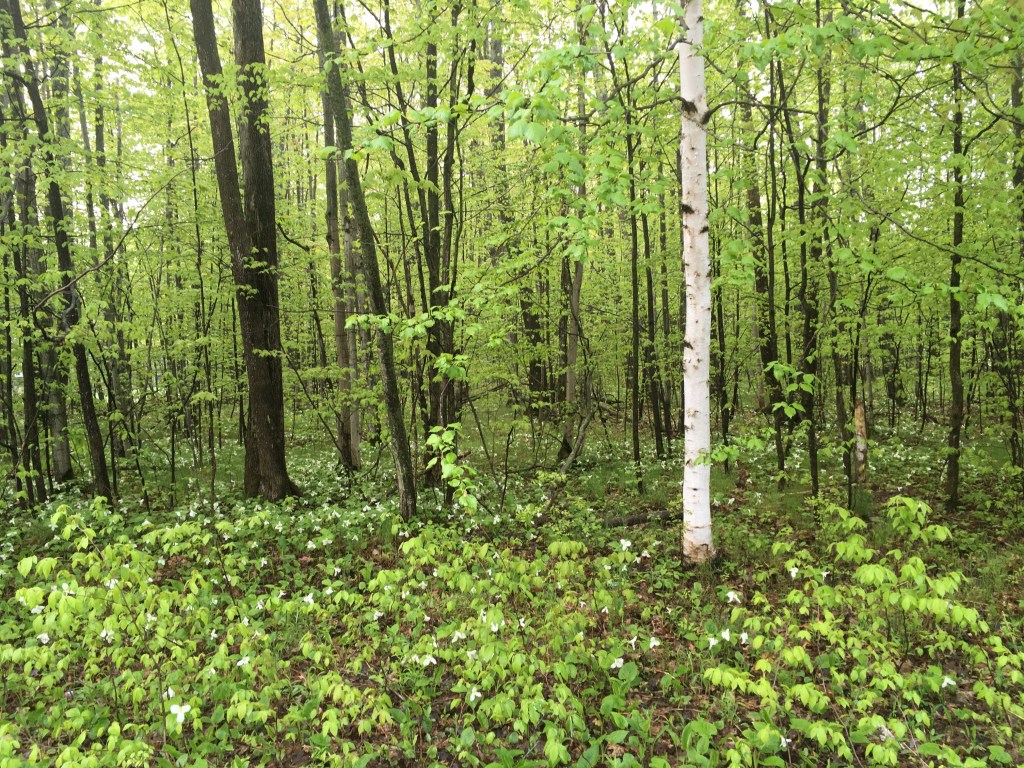
One white birch tree in a green forest, trilliums in bloom around it.

A lone birch amongst other deciduous trees, hundreds of trilliums at its feet.  

To me, the picture represents . . .

. . . determination to be authentic no matter what is going on around . . .

. . . a white tree being applauded by an audience of trilliums . . .

. . . alone, but not lonely. . .

What does the picture bring to your mind?

3 important answers

Book cover for Jon J. Muth's The Three Questions

It’s time once again to remember The Three Questions by Jon J. Muth.

Muth took a short story written by Leo Tolstoy and reworked it with animal characters to appeal to children. In the book, a boy named Nikolai goes on a journey to seek answers to three BIG LIFE questions:

  1. “When is the best time to do things?”
  2. “Who is the most important one?”
  3. “What is the right thing to do?”

His steps lead him to encounters with a heron, a monkey and a dog. Each of these characters answers the questions in way that reflects personal biases. The heron suggests the best time to do things is after everything has been planned in advance. The dog believes the most important one is the one who makes the rules, and the monkey knows the right thing to do is to have fun all the time.

Not satisfied, Nikolai climbs a high mountain to seek the answers to his questions from a wise old turtle.

When he reaches the top of the mountain, he finds the wise, old turtle digging a garden. Wanting his full attention and knowing that a young boy digs much faster than an old turtle, Nikolai takes the shovel and finishes turning over the hard soil.

When he is leaning on his shovel after the last shovel full of dirt, he hears a cry for help coming to him out of the windblown forest. He follows the sound and finds a panda knocked out by a fallen tree. Nikolai rescues her and takes her to the turtle’s house to get warm.

When the panda wakes up, she asks, “Where is my child?” Alarmed, Nikolai runs back to the forest where he finds the baby panda, shivering and alone.

Before Nikolai departs, he and the wise old turtle reflect on the answers the boy has found.

  1. “There is only one important time, and that time is now.”
  2. “The most important one is always the one you are with.”
  3. “The most important thing is to do good for the one who is standing at your side.”

Tolstoy sure was one wise old turtle.

A spark of light on the path

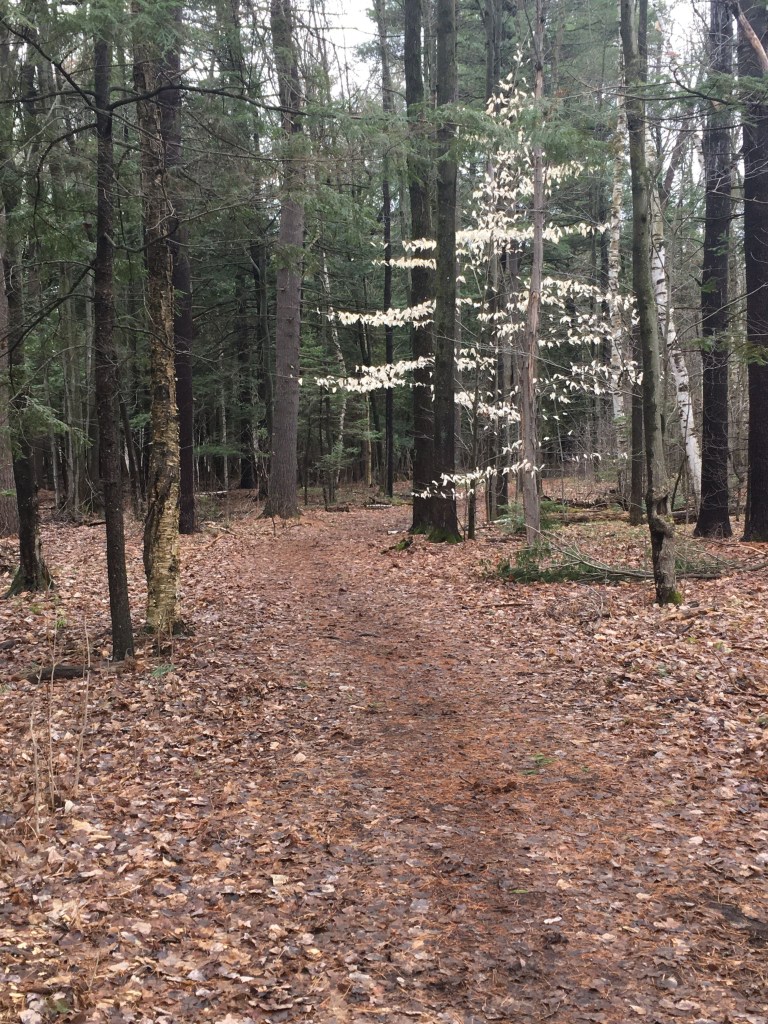
Wooded path with one tree with white leaves

On Sunday I walked in the woods near my home.

Last autumn’s leaves have not yet composted, so they cover the parts of the path that aren’t muddy. The trees in my Ottawa, Canada climate are budding, but branches are still bare of leaves. Muted colours of grey and brown and dark forest green dominate.

I rounded a corner in the path. Up ahead, white leaves fluttered on a single tree. With branches stretched out in a triangular shape, the leaves resembled the flickering lights of a Christmas tree.

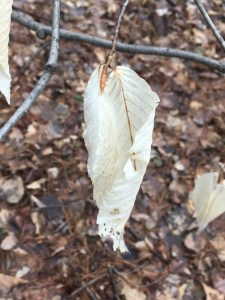
I stopped to appreciate it. I walked closer to examine the leaves. I thought about another of Robert MacFarlane’s words: marcescence. It can refer to trees that hold on to leaves through winter, or people who wither but don’t fall.

Others might have passed by without noticing the simple gift of nature. I’m glad that I walk mindfully, on the lookout for sparks of light on my path.

If we’re watchful, we can perceive those little boosts to the spirits. They help us during times when we’re withering, so we don’t fall.

Close-up of a white leaf

Temenos: Are you in your sanctuary?

I might have been a hermit in another life, I think.

This time of social distancing is easy for me. I’m in my home. I love my home. It is my sanctuary.

Or one of the anyway. I also find sanctuary in other places: the woods, friends’ houses, and, yes, church.

Are you in a sanctuary? Which sanctuaries do you miss?

Woods in the spring