Tag Archives: spirituality

Top 10 reasons to belong to a faith community

Who are the people helping you through this pandemic? I have neighbours, friends, my book club, and writing circles. I also have a core group of people who support me in all things: the fellow members of my progressive faith community, tirelessly doing good in the world. Here are my top 10 reasons why they are my peeps.

10. Critical thinking

There are faith communities out there that don’t tell you what to think. (There are. Really.) There are faith communities that say, “Yeah, I don’t know what it’s all about either, but let’s explore this mystery together.” Churches, mosques, synagogues and temples provide places for you to sit and listen and ponder fundamental matters.

9. A community of support

When life brings you to your knees (and it will) a faith community helps you through. The connections forged at deep levels in these groups help people to rebuild lives after tragic events like the loss of a child, the early death of a spouse, or global pandemic.

8. Lifelong learning

“I am still learning,” Michelangelo said. An insatiable curiosity drives happiness, and faith communities come with an endless supply of brain teasers.

7. Singing!

Our popular culture provides so few opportunities for belting out a tune. If you want to sing, play the guitar, or bang a drum, we have the place for you. Best of all, when you sing in these venues, even a solo, you don’t have to be perfect. The audiences are very forgiving.

6. Child education

What does the wisdom of Solomon mean? Under what circumstances might one require the patience of Job? What is a David and Goliath situation? How many prodigal sons, or daughters, do you know? Have you ever been the Good Samaritan? Our societies, our art, and our literature contain religious references which would be meaningless without adequate education about our heritages. 

5. Ritual

Humans create rituals. It is what we do. Jumping into, or out of, any particular activity without some form of ritual feels wrong. At a hockey game we introduce the players and sing the national anthem. At graduation ceremonies we wear gowns, deliver moving speeches, give individual rewards, and have a group celebration. Faith communities provide grounding rituals for the most pivotal moments in our lives. Sometimes the comfort of ritual is all that gets someone through the night.

4. Peace

When I returned to church as an atheist adult, I did it for my daughter. I was shocked to discover there was something for me too. At the time I had a young baby, I worked full time and we had just moved to a new house. I was stressed. When I went to church each week, I left my baby in the care of the nursery workers and sat in the pew. I expected to sit and roll my eyes at everything the minister said. Instead each week he said something that made me think.  Each week he said things that surprised me, challenged me. Each week, at some point, I had tears in my eyes. That hour of peace fulfilled a need I didn’t even know I had.

3. Helping others

Faith communities pick up where social agencies drop off. The charitable donations and volunteer activities of members of all kinds of faith communities keep many aspects of our society afloat. Clothing donations, homework programs, soup kitchens, food banks, emergency assistance, global outreach. The charitable deeds amount to millions of volunteer hours and billions of dollars.

2. Creativity and growth

A former minister of mine used to say, “Do it, and you’ll grow.” This simple statement encouraged many to take on tasks that made their fingertips tingle with fear. Our involvement with faith communities pushes us to do work that stretches us past our comfort zone.  Every time we climb over our fear and break through that barrier, we grow. We learn to get past fear. Are you brave enough to deliver a Christmas basket to a family in need and share the experience in their home? Would you teach Sunday School? Preach a sermon? Do it, and you’ll grow.

And the number 1 reason to belong to a faith community . . .

1. Fun

So many of the activities in faith communities are just plain fun!

A country lane through a grove of trees.
Photo by Donald L. Smith © 2014

Hope and faith: Something missing, something coming

On the four Sundays leading up to Christmas we light Advent candles—one candle per week, each with a different word associated with it: Hope, Peace, Joy and Love.

Usually the first Sunday of Advent falls on the same date as an important Canadian sporting event: the Grey Cup. [The championship game for the Canadian Football League.] Usually we host a gathering of neighbourhood friends for a Grey Cup party involving unhealthy food and beer. A kind of Canadian Superbowl party. At some point in the evening, we still the TV, quiet the conversation, and take time to be peaceful, to appreciate each other’s friendship, and to light the candle of Hope. 

This year the Canadian Football League did not play at all due to COVID. There was no Grey Cup. There was no gathering of friends.

We lit the candle of Hope, but something was missing.

But that’s when we feel hope, isn’t it? When we feel that something is missing. That’s when we yearn.

This year, there is a whole lot of yearning going on. So . . . many . . . things . . . we are missing.

In these times I try to remember that the sunshine side of hope is faith. That’s when we relax in the knowledge that all shall be well.

When we hope, our bodies are taut, we lean forward with fists clenched. In faith, we relax, drop our shoulders, breathe . . .

We hope because something is missing. We have faith because someday, somehow, something’s coming. Get ready.

Advent wreath with one candle of Hope lit.
The Candle of Hope

Temenos: Are you in your sanctuary?

I might have been a hermit in another life, I think.

This time of social distancing is easy for me. I’m in my home. I love my home. It is my sanctuary.

Or one of the anyway. I also find sanctuary in other places: the woods, friends’ houses, and, yes, church.

Are you in a sanctuary? Which sanctuaries do you miss?

Woods in the spring

You can’t skip Day Two: Where the magic happens

Day two, or whatever that middle space is for your own process, is when you’re ‘in the dark’—the door has closed behind you. You’re too far in to turn around and not close enough to the end to see the light.”

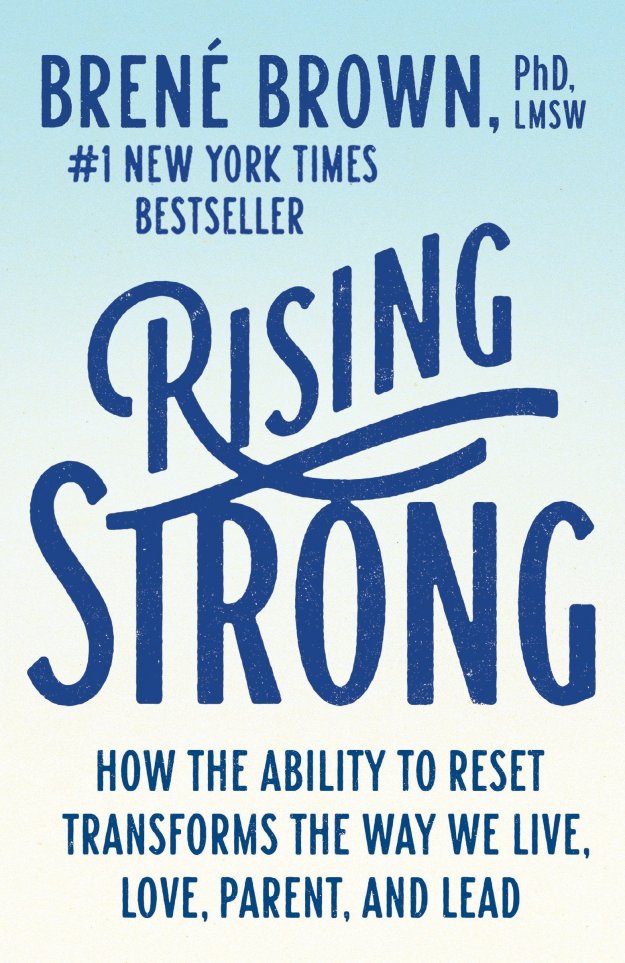
—Brené Brown in Rising Strong
Book cover Rising Strong

Brené Brown, author of Rising Strong, leads three-day workshops that encourage people to dare greatly and accept vulnerability. On Day One, people arrive bright with curiosity and anticipation. Day One is easy.

But not Day Two. Day Two is hard. It’s the time of not knowing.

The middle space is one of doubt and discomfort. Sometimes people want to give up and flee. They want the happy ending, sure, but not if it’s painful or scary.

But you can’t skip Day Two.

“The middle is messy, but it’s also where the magic happens.”

Day Two is the space after death or divorce, but before life re-created in a new way. Day Two is the scorching pain of labour before the birth of a child. For some of us, Day Two is Easter Saturday.

During our times in between, when we can’t see the happy ending, we have to remember that wonderful things beyond our wildest imaginings could be around the corner.

It might be messy and difficult, full of grief, doubt, confusion or anger, but we have to go through it without knowing where it’s going.

It’s not fun, but you can’t skip it either. It’s where the magic happens.

wishing-for-wind

Sacraments: Letting Go and Waiting

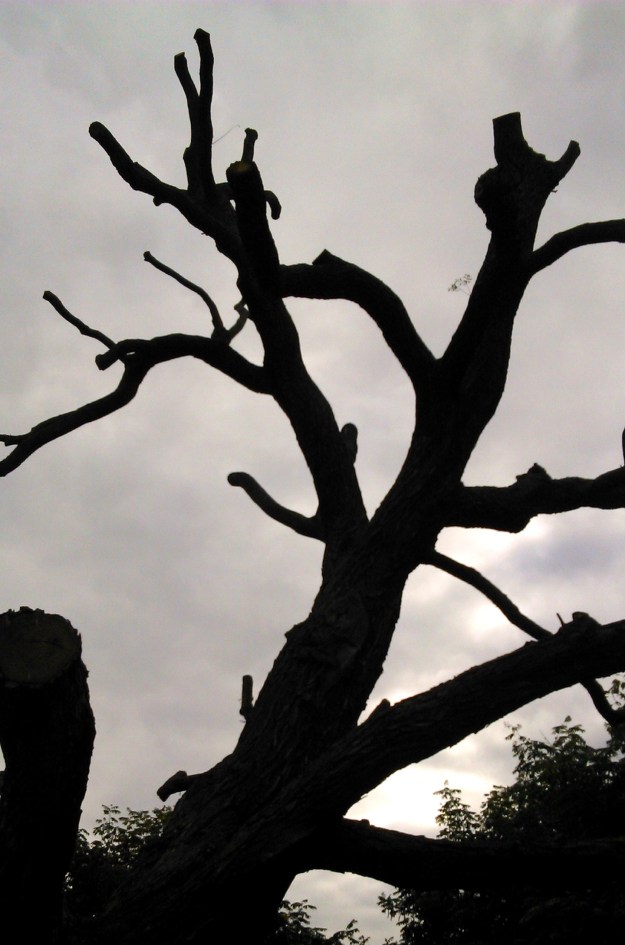
Pruned branches of tree with one sprig of new life

Another week begins.

Another week without our usual workplaces, casual trips to the store, or gatherings of friends.

Some of us have let go of long-planned vacations.

Some of us are seized with panic about lost income.

We have let go of what is not essential. We are waiting for “normal.”

Our situation reminds me of this beautiful work by Macrina Wiederkehr, a Benedictine sister, author, and lover of the spiritual.

She wrote this poem, which she gave me permission to share, about times when we are stripped down, vulnerable, and “wearing the colors of emptiness.” At those times, we are living out the Sacrament of Waiting, ready for a new, surprising kind of beauty.

The Sacrament of Letting Go

© Macrina Wiederkehr

Slowly she celebrated the sacrament of letting go. 
First she surrendered her green, 
then the orange, yellow, and red 
finally she let go of her own brown. 
Shedding her last leaf 
she stood empty and silent, stripped bare. 
Leaning against the winter sky, 
she began her vigil of trust.
Shedding her last leaf, 
she watched it journey to the ground. 
She stood in silence 
wearing the colors of emptiness, 
her branches wondering, 
How do you give shade with so much gone?
And then, 
the sacrament of waiting began. 
The sunrise and the sunset watched with tenderness. 
Clothing her with silhouettes 
that kept her hope alive.
They helped her to understand that 
her vulnerability, 
her dependence and need, 
her emptiness, her readiness to receive, 
were giving her a new kind of Beauty. 
Every morning and every evening they stood in silence, 
and celebrated together 
the sacrament of waiting.

© Macrina Wiederkehr

A time to reflect, no matter what you believe

Red Velvet Pancakes IHOP
Red Velvet Pancakes from IHOP

It’s Pancake Day, a Lenten tradition with roots in the Jewish history of the Christian tradition.

On the day before Passover in observant Jewish homes, the family cleans thoroughly and uses or removes any food that has leaven in it. It’s a symbolic way to let go of old life and embrace the new. Christians morphed this idea into Pancake Day, a time to use up eggs and fats in decadent foods before the deprivation of Lenten fasts began.

Few people I know “give up” anything for Lent anymore.

  • Some have abandoned organized religion because they see only the harm that it can cause.
  • Others are still a part of a faith community but don’t “give up” because they see that as punitive instead of inspirational.
  • Still others don’t “give up” something they love in a way that feels like deprivation or punishment. They examine their lives to find something that is not feeding them mentally, emotionally, physically or spiritually, and they give themselves “freedom from” that harmful element.

The minister at my church says Lent is like the time between when a seed is planted and when it sprouts. You know the seed needs to be nourished, but you can’t see any signs of new life yet.

No matter what you believe, this time of year is good for reflection. It’s a time to ponder what you can give yourself freedom from, or what you could take up instead.

Whether you eat pancakes tonight or not, take some time to plant a seed. Nourish it until new life grows.

What kind of sprouts do you want to see?

A field of sprouting corn stalks