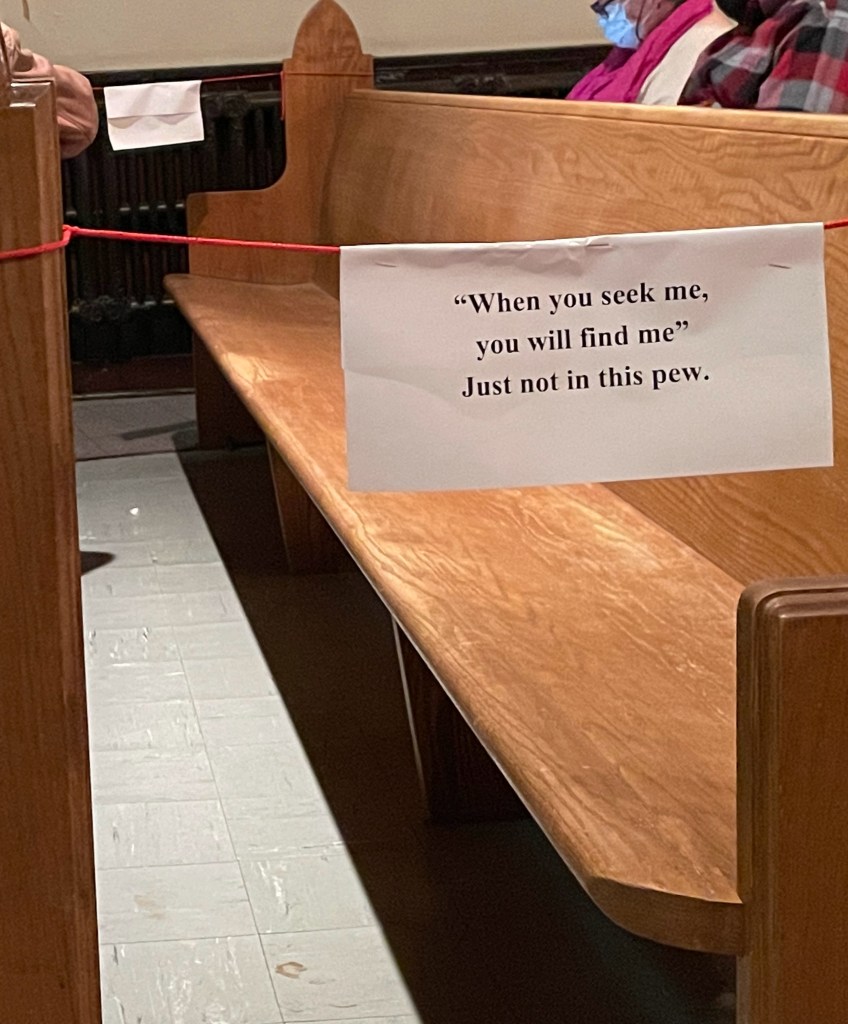
“When you seek me, you will find me, when you will seek me with all your heart.” –Jeremiah 29:13
I attended a concert on Friday night. Due to COVID restrictions, the venue needed to bar access to every other row of seating. They did so with humour.
The sign above made me laugh, and think.
We often seek some wonderful new event or item for our lives, and we expect it to appear immediately and directly in our path. POOF!
Not so fast. Maybe we can find what we seek, but not right away and not in the first place we look.
Seek, and then keep seeking, with the whole heart.
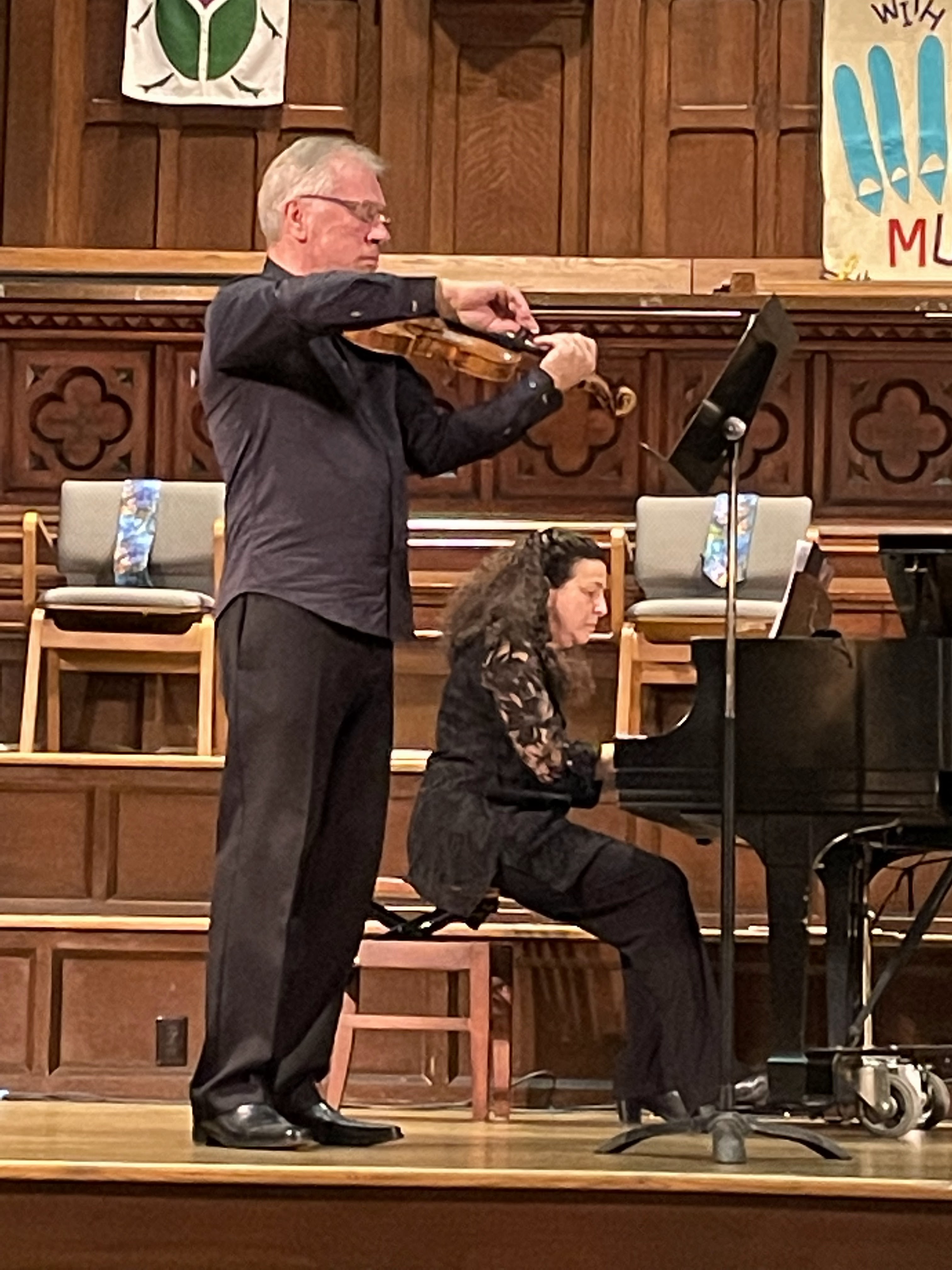
Ioan Harea on violin and Judy Ginsburg on piano. Lovely.
galore (adv.) 1670s, from Irish go leór, and equivalent Scottish Gaelic gu leóir “sufficiently, enough,” from Old Irish roar “enough,” from Proto-Celtic *ro-wero- “sufficiency.”
He was raised with love by a family with Irish roots. My entire life I associated strongly with that Irish heritage. I sang and danced during the loud and proud St. Patrick’s Day celebrations in Canada’s Ottawa Valley.
Then, this past Christmas, my son gave me a DNA test as a gift. The results showed my Irish DNA at the BOTTOM of the list of the ethnicity estimate, at 2 %.
2 %. I couldn’t have been more astonished.
A second surprise lay in store. The largest percentage of my DNA indicated Scottish and Scandinavian heritage. I am three-quarters Scottish and . . . Viking, I guess?
In September, as fate would have it, my son headed off to Edinburgh, Scotland to do his Master of Physiotherapy. We won’t travel there just yet (you know . . . COVID), but we’re making plans for future trips. I began to read Love of Country: A Journey through the Hebridesby Madeline Bunting.
I read about the land of my DNA. I read of crofts (small rented farms with a right of pasturage held in common with others), and machair (fertile plains), and lochan (small inland lakes). I learned the roots of the word galore (see above) and mused about how wonderful it is that galore really means that you have everything you need for the given moment.
All of this got me to thinking about where I’m from (Scotland/Scandinavia) as opposed to where I am really from (the Ottawa Valley, Canada).
This past week, the book Where Are You From by Yamile Saied Méndez passed through my hands at the library where I work. It is the story of a child who must answer where she is from—no, where she is really from—to the point where it hurts.
When people ask someone like me where I’m really from, it means Where were you raised?What is the place that formed you?
For racialized people, the situation is reversed. For them, where are you really from means What foreign country did your people come from?
That makes it a backwards question, because for any of us, the place where we are really from is the place that has formed us.
My DNA says that the foreign countries my people came from were Scotland and the Scandinavian countries, but I’m really from a farm in the Ottawa Valley. I’m really from a place where we dug in the dirt to grow our food, where we wore hand-me-downs, and where neighbours and families helped each other out. On any given day we had everything we needed. Sufficiently, enough.
In other words, we had plenty galore. What a fine place to be from. Really.
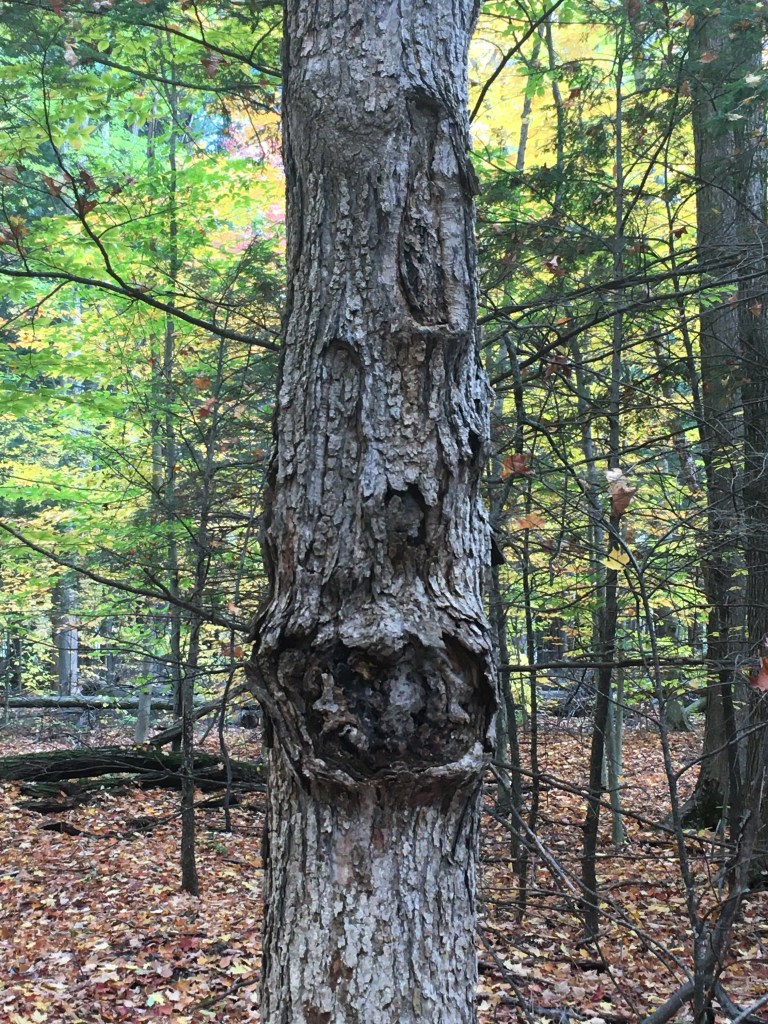
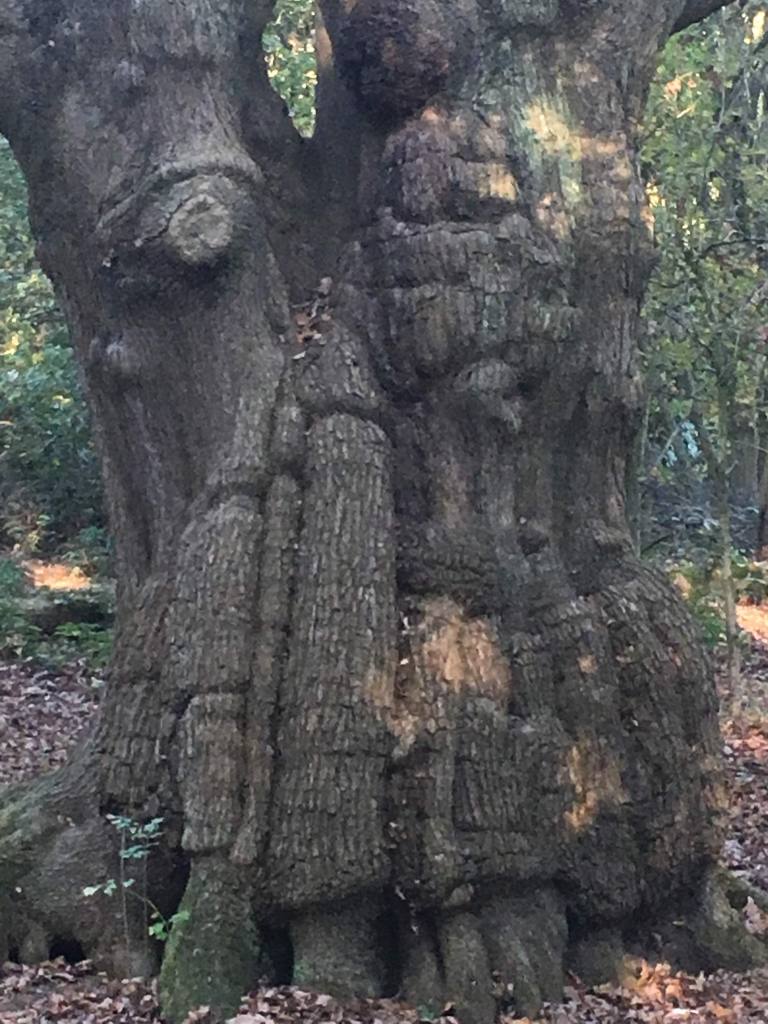
I stroll through the woods near my home, and I run my hands along the gnarled bark of ancient trees. I trail a finger down the deep wrinkles in the trunk, and I think, “How beautiful.”
The twisting growth and grooved skin gives a tree its gravitas and wisdom. In fact, the more gnarled and grooved a tree is, the more we love it.
A tree I love in Ottawa, Canada
A tree I love in Hampstead Heath
And yet, we detest those things in ourselves. Why is it that we humans fear wrinkles so much?
According to the Business Insider, in 2020 the “beauty” industry was growing at a historically fast pace. We are more afraid than ever to let our natural selves shine. The industry then was valued at an estimated $532 billion dollars per year, and it’s growing.
We are draining our bank accounts so that we don’t look like trees.
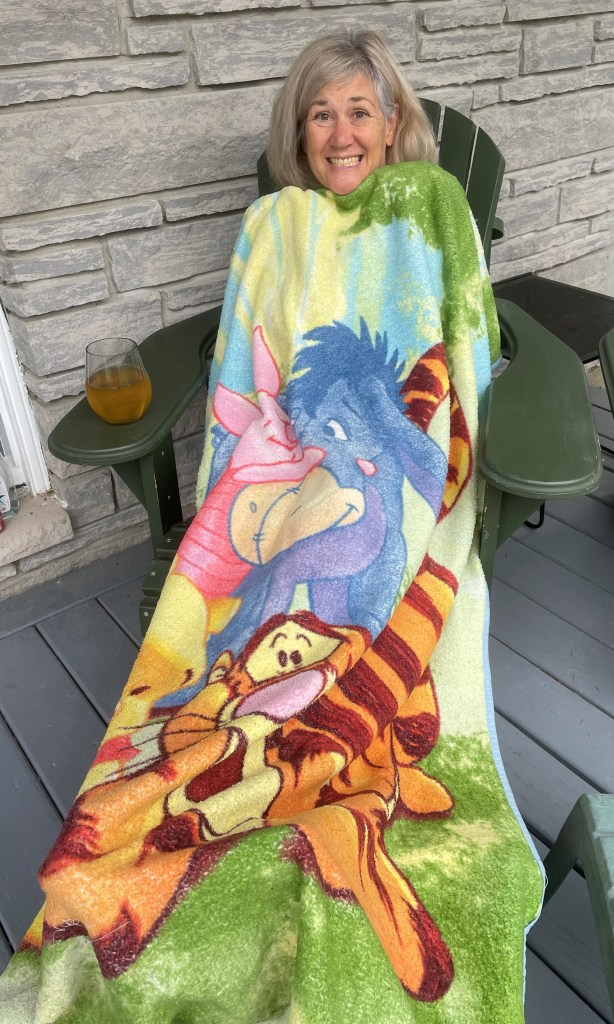
I celebrate a birthday this week. I am older. My knuckles have swollen, so rings no longer slide over them the way they used to. My lifetime of smiles and laughter shows in the grooves that curve around my eyes and mouth. How beautiful.
Old enough to have wrinkles, but not so old that I can’t still love the Winnie the Pooh blanket
I’m not the oldest tree in the forest, but I’m not the youngest either. Many saplings grow around me. My wish is that by the time those supple trees reach my age, they will see the beauty of aging.
Algonquin Provincial Park lies northwest of Ottawa, and several of my acquaintances have headed to Ontario’s oldest provincial park for pleasure jaunts to the wild solitude of its lakes and canyons.
They dip paddles in still waters. They drift slowly by moose munching shoreside water plants. They dive into the deep, cold waters of the Canadian Shield lakes.
Their trips remind me of John Shaw. I learned of him and his wife during a trip to the Shaw Woods Outdoor Education Centre. He was a miller from Inverness, Scotland, who travelled to the area in 1847 from what was then Bytown [now Ottawa]. He and his wife, Barbara Thompson, made the trip by canoe.
Today, people make the trip by car in less than two hours, but in 1847 it would have taken days and days by canoe. They would have paddled against the prevailing wind. They might have battled pouring rain while balancing cumbersome loads. They would have portaged around rapids, carrying the heavy canoe and all their worldly goods.
Once upon a time a three-year-old boy sat in a church. At the front of the cavernous space, far away from him, an adult voice yammered on. The boy squirmed. Squiggled. Stretched out on the floor.
To entertain him, a woman handed him an activity sheet. It had a maze printed on it, full of dead ends and clever diversions.
Happy to have any distraction, the boy sat up and began to trace the path with a finger. He made his way through the maze with delightful disregard for the lines. After blowing through any twists and turns that might have blocked his progress, his finger reached the end.
He raised his arms in victory. “I did it!”
“Yes, you did,” the woman affirmed.
Why tell him that crossing lines isn’t always that easy?
Why burden him with the idea that some lines are best left uncrossed, and sometimes it’s hard to figure out which ones.
Better to send him out into the world excited about obliterating barriers blocking his path. Better to equip him to cross the many lines that need to be crossed.
At the exhibition Vincent himself melted from the ceiling.
His brushstrokes came to life on the high walls and the floor all around me.
His artist soul reached out to my creative one as if he had written sentiments to me personally across centuries. I am certain every person immersed in his experience felt the same.
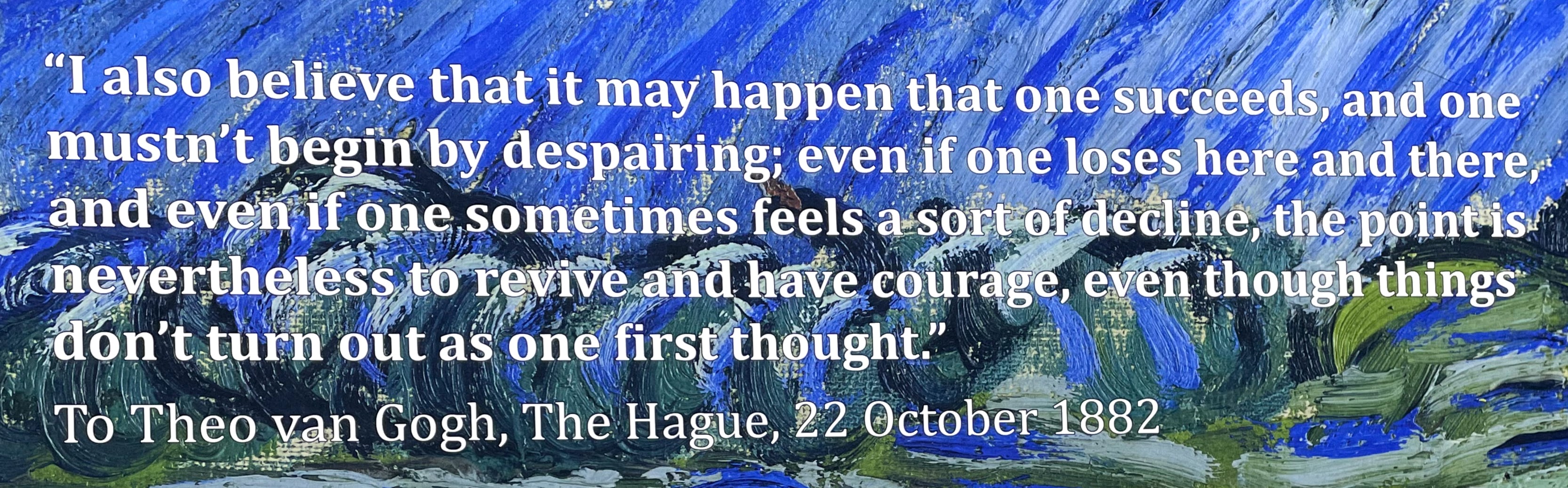
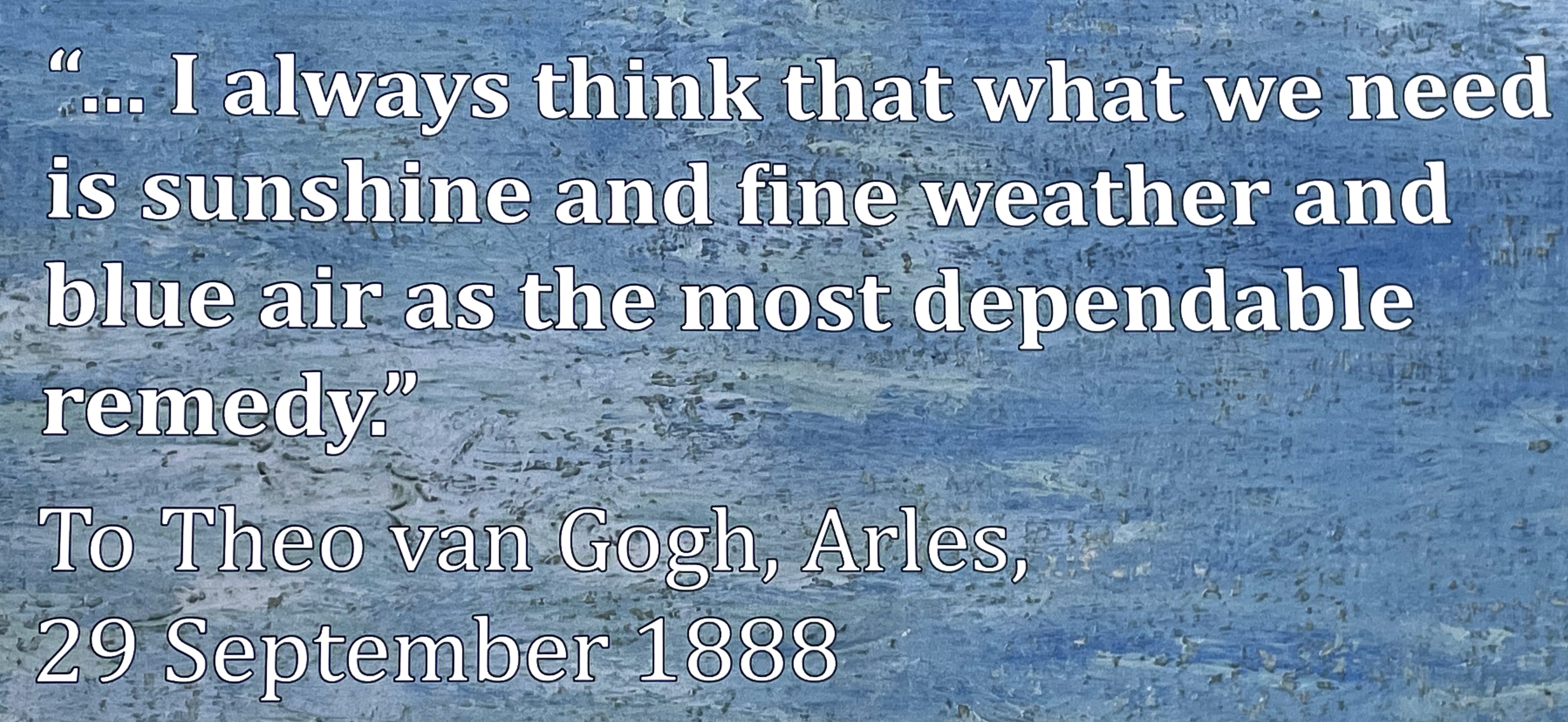
Vincent told me to enjoy the air and sunshine. He urged me not to despair.
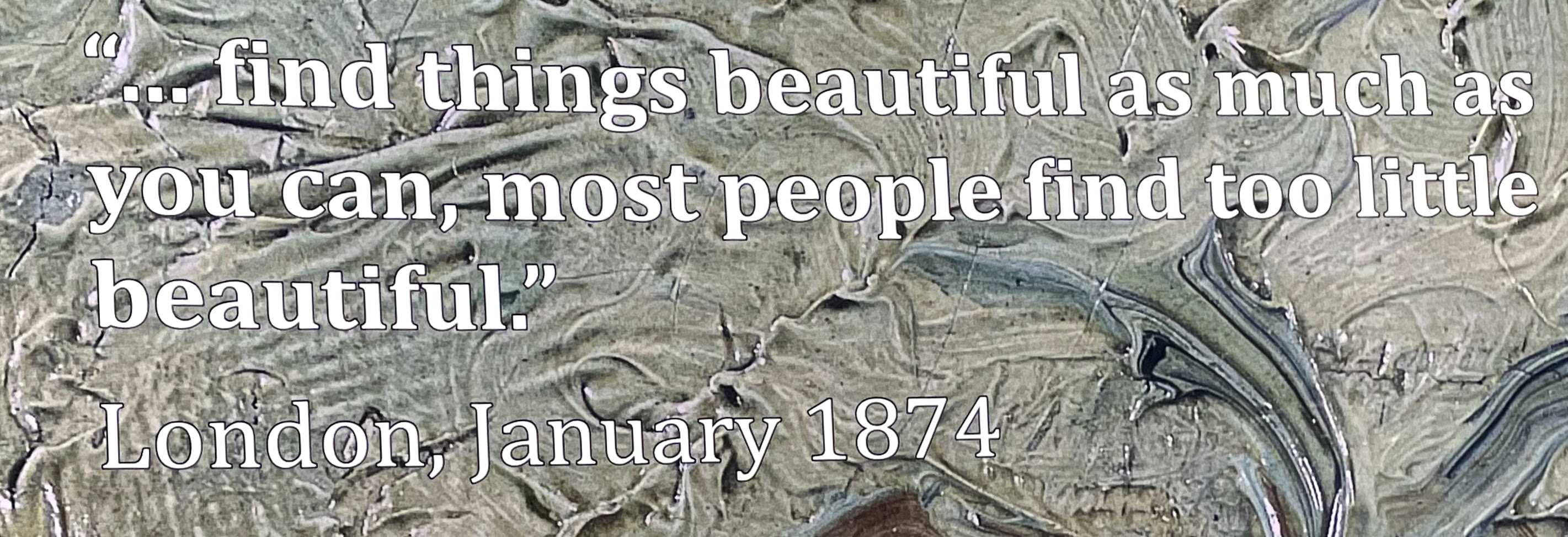
He reminded me to seek out the beautiful. A message sent to me, and you, from 1874 to the present.
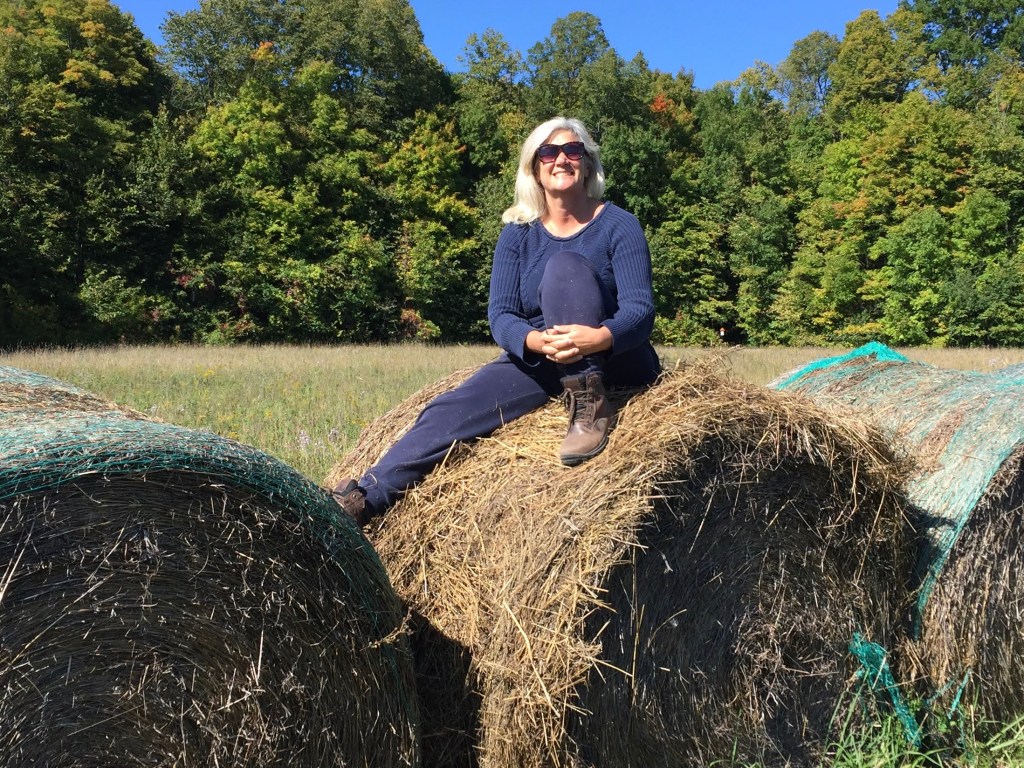





 Somerton Smith