Category Archives: Author

Total amazement

In the movie Joe Versus the Volcano, a man (played by Tom Hanks) believes he is dying of an incurable disease. He agrees to travel to a South Pacific island to throw himself into a volcano to satisfy the beliefs of the superstitious island residents.

But as he travels there, he . . . wakes up.

“Almost the whole world is asleep. Everybody you know. Everybody you see. Everybody you talk to . . . only a few people are awake and they live in a state of constant total amazement.” 

—from Joe Versus the Volcano by John Patrick Shanley

Total amazement happens often enough. But, constant total amazement? Much more challenging.

Usually, we need jarring events to awaken us. Power outages jolt us into amazement electric lights—the ones we flick on without a thought.

A broken leg—or even a cut on a finger—painfully reminds us of the wonder of a healthy body.

How about the device you’re reading this on? Isn’t the technology totally amazing?

We need to fall asleep to the amazement sometimes, just so we can function. After all, somebody has to do the dishes. If we lived in constant total amazement, we might get no farther than our bedroom doors every morning, or the park bench on a sunny afternoon. Because constant total amazement stops us in our tracks.

Perhaps John Patrick Shanley was right when he wrote those words for Joe Versus the Volcano. Maybe almost the whole world is asleep, just so we can get the dishes done and the lawn mowed.

But maybe, if we think about that, it will prompt us to wake up at least some of the time, maybe a little more often than we usually do. It’s a start.

What is totally amazing around you right now?

In the photo below you can see that my son is doing is best to live in constant total amazement.

Man sitting on a cliff edge in the south of France.
Yeah, mothers don’t worry at all when they see photos like this.

Living the first draft

I posted this on a previous blog. It’s come to my mind again in recent weeks.


Sometimes I wonder . . . Did someone ever say to Mozart, “Ya know what, Wolfgang? I think that should be two quarter notes instead of one half note.”

  • Have you ever been lost for words in an emotional moment only to think later, “I should have said this . . .”?
  • Or perhaps you said the absolutely worst thing possible only to think later, “If only I hadn’t said that!”?
  • Or maybe you have thought, “If I could do that over again, I’d do it differently.”?

We don’t get to edit our lives before publication. Everything we do is first draft.

Anne Lamott encourages writers to “Write shitty first drafts.” She knows that getting something—anything—down on the page is key. Writers can’t believe that words are supposed to sprinkle gracefully onto the page in perfect pearly rows. We’d never get anything done, we’d be so frozen with apprehension.

A mediocre mess of an idea out there is better than a perfect pearly idea hidden.

Every day we meet people and choose words to speak to them. Sometimes we choose appropriate, helpful words. But sometimes we choose hurtful ones.

Every day we choose clothes and do our hair. Sometimes our wardrobe and hair could be on the cover of Vogue. But sometimes we manage only sweatpants and a washed face.

Occasionally  life kneecaps us with unexpected blows. Sometimes we rise above it with wise, rational choices. But sometimes we solve problems with beer and a whiskey chaser.

We can’t edit our lives before publication, and that means our words and actions won’t sprinkle gracefully in perfect pearly rows. We have to live our delightfully shitty first draft and forgive ourselves for it.

Because one mediocre mess of a life out there is better than a perfect pearly one hidden. 

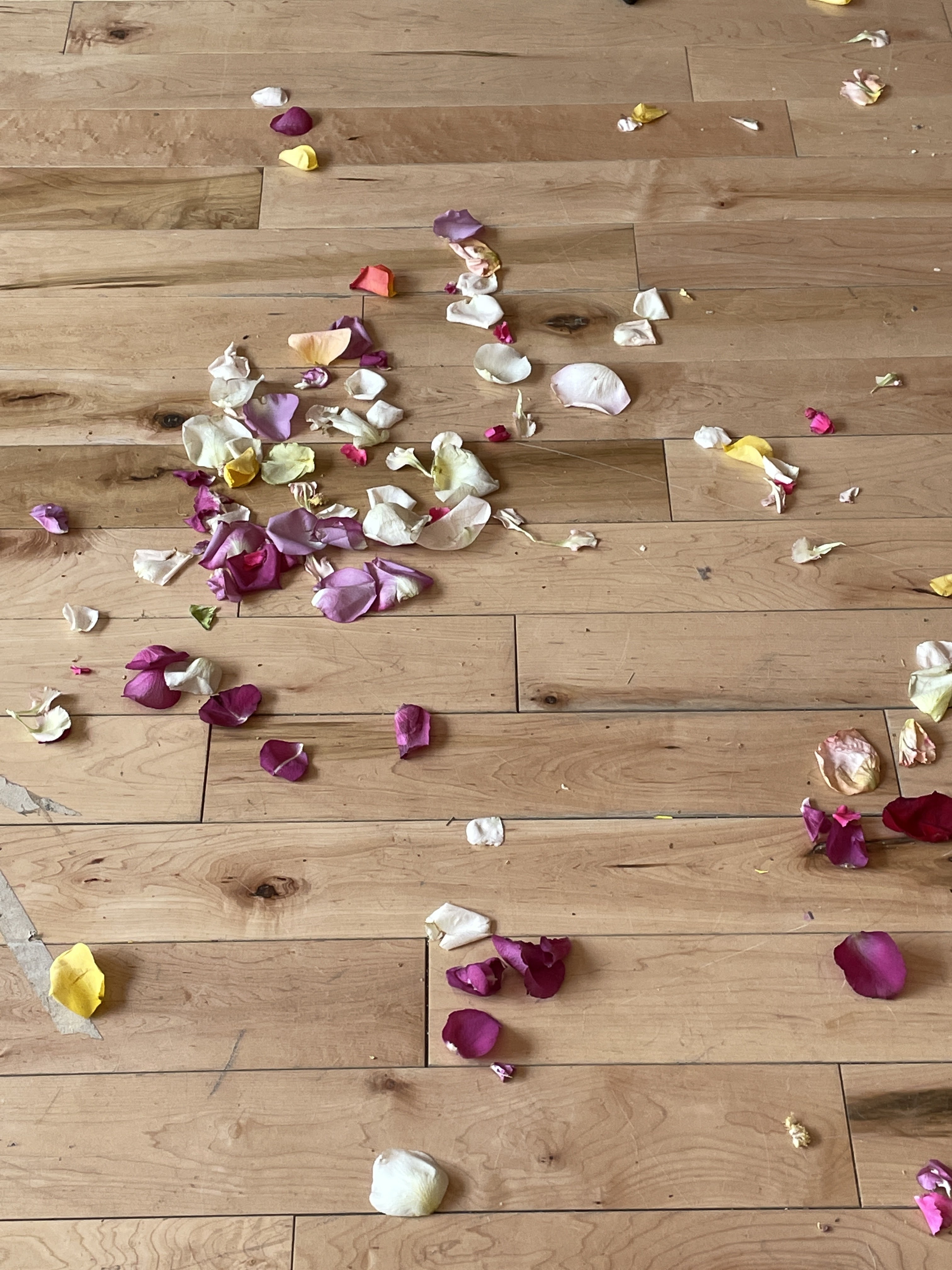
Rose petals scattered across an light pine hardwood floor.
Scattered rose petals. A beautiful mess.

Planner, Pantser, Pouncer

At a recent gathering of writing friends, the topic of planner vs pantser came up.

I declared that I used to call myself a pantser (a person who writes by the seat of their pants according to the whims of the day), but I learned that I needed to add in a little more planner (a person who plots out stories in advance) to get things done.

Cover of Story Genius: How to Use Brain Science to Go Beyond Outlining and Write a Riveting Novel (Before You Waste Three Years Writing 327 Pages That Go Nowhere) by Lisa Cron

For more on this, I recommend Story Genius: How to Use Brain Science to Go Beyond Outlining and Write a Riveting Novel (Before You Waste Three Years Writing 327 Pages That Go Nowhere) by Lisa Cron.

One man in the group had never heard these expressions. He asked for clarification. “Did you just say planner vs pouncer? Because that’s what I do. A thought occurs to me and I pounce on it.”

How wonderful! He added a third element to the conversation, one that both planners and pantsers can embrace.

For example, careful planners who are stuck at a story plot point might take a walk for inspiration. While strolling their eyes might fall on something that triggers the solution to their next step. Ah ha! They would cry as they pounce on the idea, hurry home and add into their overall plan.

Freewheeling pantsers might sit with fingers on keys or pen hovering over paper. Open to receiving as they are, a thought—the genesis of an idea—arrives to them from the Amazing Mystical Universal Supply of Ideas and they pounce.

Are you a planner or a pantser? Even if you’re not a writer, have you pounced on any good ideas lately?

Photo by Flickr on Pexels.com

Being rid of that which does not feed us

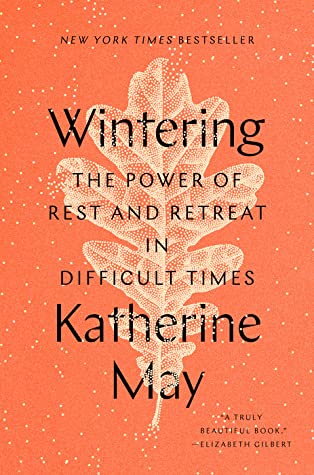
I have been reading Wintering: The Power of Rest and Retreat in Difficult Times by Katherine May, a recommendation of TheHomePlaceWeb blog.

The book provides solace to the soul, and that is something we citizens of Ottawa, Canada need in our difficult times.

Katherine May writes about how we think of life as linear, a slow march from birth to death. That is true, but May reminds us that the pattern of life is also cyclical, or seasonal. We circle through periods of beginnings and endings, storing up and shedding, and wakefulness and sleeping throughout our lives.

At the beginning of a day, or a project, or a course of study, we are similar to trees with green leaves full of chlorophyll. The leaves absorb sunlight and convert carbon dioxide and water into tree food, and we absorb information and convert physical supplies into some sort of product that serves to advance our lives. Spring and summer cycles are about gathering and growing.

At the end of a day, or fiscal year, or a career, we prepare for change in the way of a tree. The chlorophyll in leaves breaks down in fall. The green disappears and exposes other beautiful colours that were always there but hidden. In a process called abscission, the cells between the stem and the branch weaken until supply to the leaf is cut off and the leaf falls. In our lives, this is when we pass on clothes we no longer need, or clear out university textbooks, or pack up personal belongings from the office and walk out the door.

Abscission, the process required for shedding of leaves, is “part of an arc of growth, maturity, and renewal.” In other words, to protect ourselves and stay strong, sometimes we need to rid ourselves of that which no longer feeds us.

BUT—and this is important —even on the coldest, darkest days of winter, when deciduous trees appear fully dead, there are buds. They are small and protected by thick scales, but they are there.

“We rarely notice them because we think we’re seeing the skeleton of the tree, a dead thing until the sun returns. But look closely, and every single tree is in bud . . .”

From Wintering: The Power of Rest and Retreat in Difficult Times by Katherine May
A twig of a deciduous tree in February against a background of snow. The branch has buds protected by thick scales.
Buds waiting for the sun

On this cold winter day in Ottawa, it helps me to know that buds are in place. It allows me to believe that the events taking place in downtown Ottawa had a spring, summer, and fall season and that the time of shedding approaches.

Soon we will be rid of that which does not feed us.

No matter how beautiful

“. . . Show me the truth about myself no matter how beautiful it is.”

—A Benedictine nun, as found in Wake Up to the Joy of You by Agapi Stassinopoulos

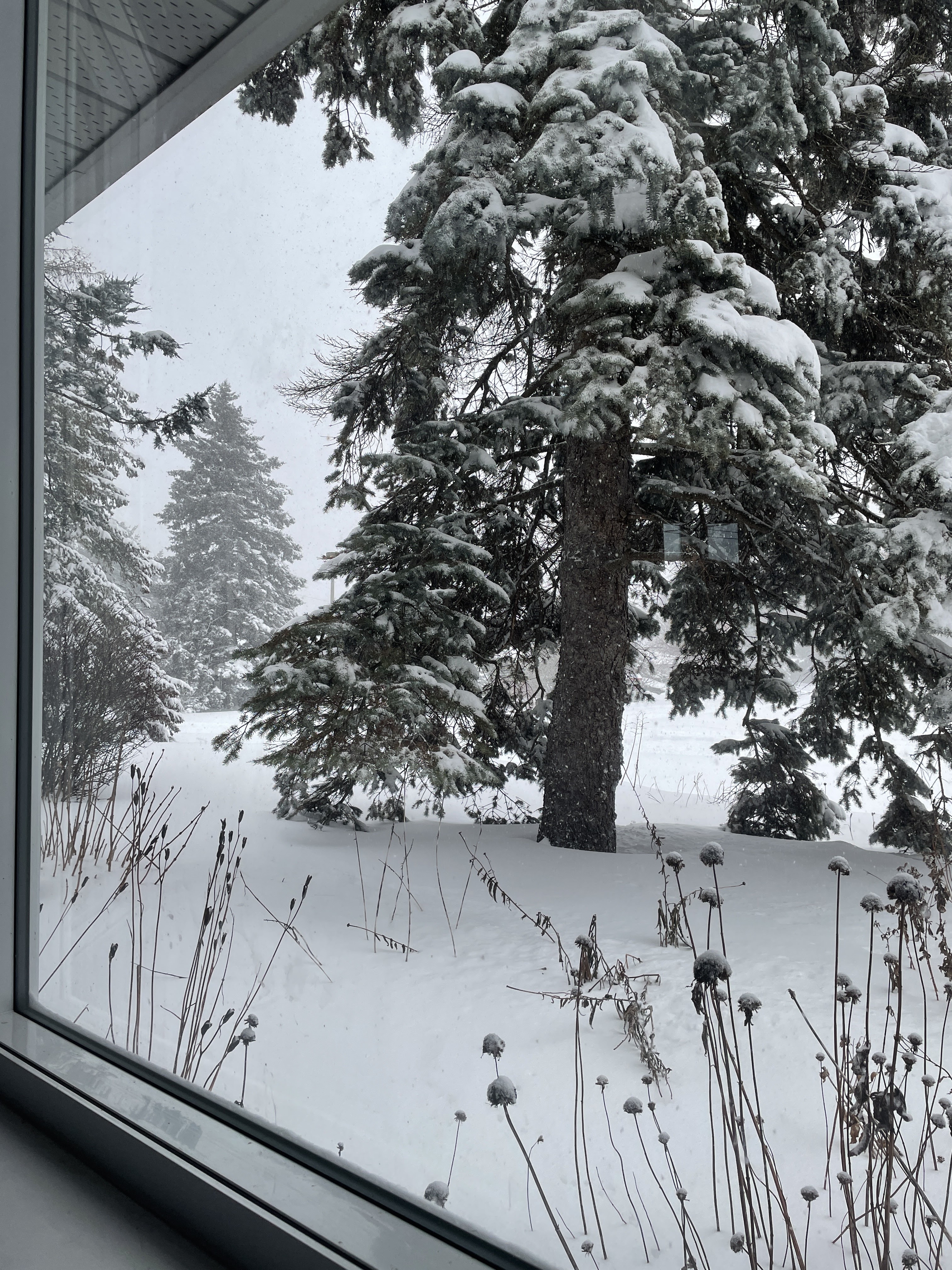
This is the scene outside my window today. We are snowed under. Homebound.

47 centimetres of snow (18.5 inches for my American friends)

Some would say this is the ugly truth of winter. I say it is the beautiful truth.

A time for an in-breath. A time to take full advantage of my word for the year: FOCUS.

A time to seek out and, more importantly, believe my own beautiful truths.

Nonplussed: Can’t trust that word

While reading Denial by Beverley McLachlin this week, I came upon the word nonplussed.

Nonplussed is one of those words that people don’t use in conversation. We are left to conclude its meaning from where we find it in writing. Up to this week, every time I’d read the word it had meant unperturbed.

In her book, McLachlin used the word in a way that did not mean unperturbed. Quite the opposite. Her character was taken aback and surprised by his circumstance.

Seeing this, I was taken aback and surprised. Nonplussed, as it turns out.

I said to my husband, “What do you think nonplussed means?”

“Surprised,” he said.

Huh. I touched my finger to the word in my e-book and selected “Look up.” The answer came:

1: unsure about what to say, think, or do:  Surprised
2: not bothered, surprised, or impressed by something: Unperturbed

I am not nonplussed (unperturbed) by these definitions. I am quite nonplussed (surprised).

What to do with a word with two opposite meanings?

May our politicians never make use of the term. Misunderstanding and world conflict could result.

No, no, nonplussed is a word not to trust.